Samsung still makes good tablets, and I like the ultrathin Galaxy Tab S12 series and its battery life.
My problem is that every generation since 2023 has removed something I had on my Tab S7+ and later on the Tab S9.
I think the S9 was the last model that kept everything and still started under $800. Since then, Samsung has dropped the Snapdragon chip, the Bluetooth S Pen, and the anti-reflective screen on most models.
Over the same period, the Plus model’s starting price climbed to $1,199.99, which is why I haven’t replaced my S7+.
The Tab S9 was the sweet spot
Snapdragon, AMOLED, and a $799 starting price
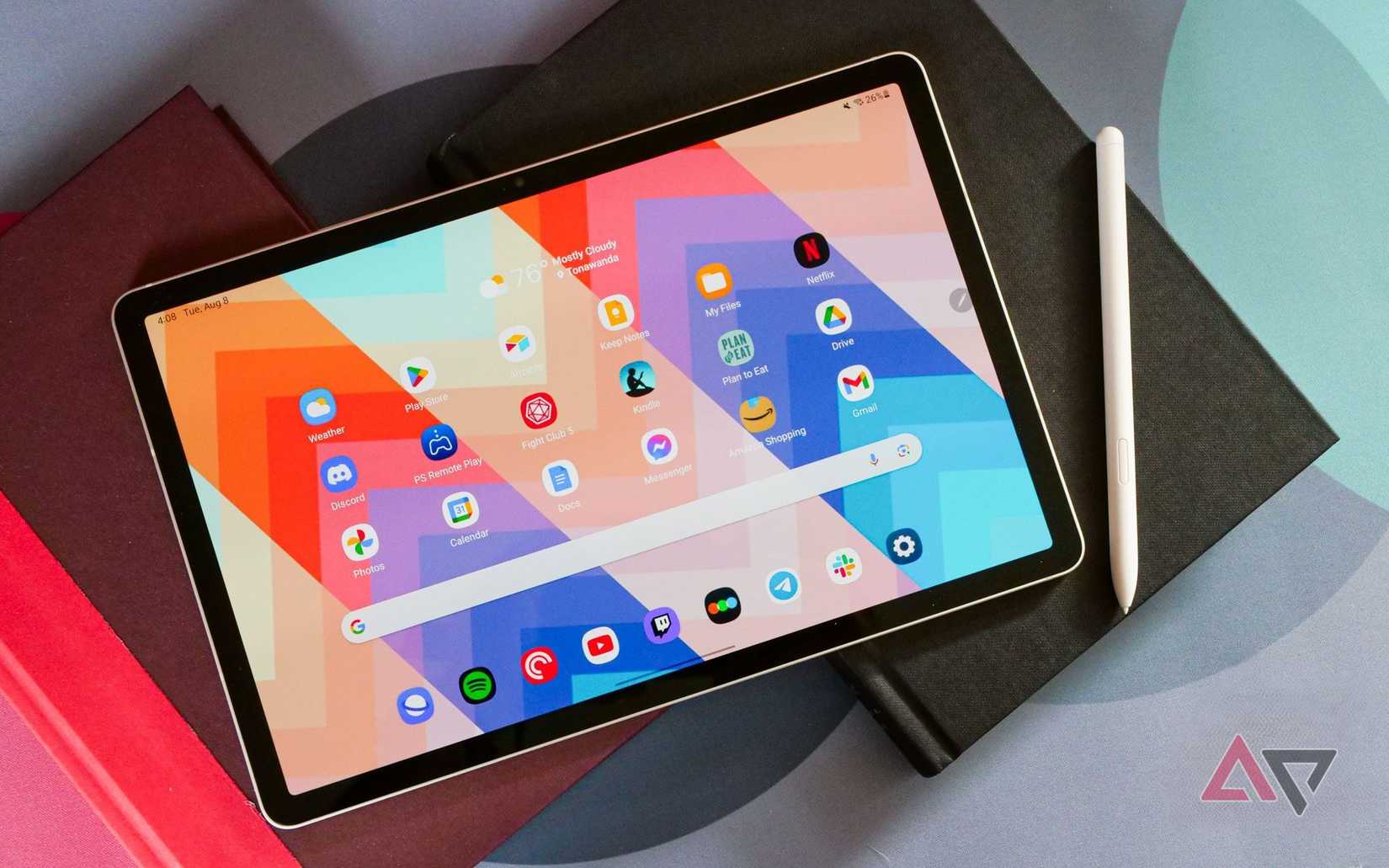
The base Tab S9 launched at $799.99 in 2023, and we got quite a big bang for the buck. Its 11-inch screen moved from the Tab S8’s LCD to AMOLED, the same panel type my S7+ had at 12.4 inches.
It ran the Snapdragon 8 Gen 2 for Galaxy, the same chip as the Galaxy S23 series. The S Pen in the box still had Bluetooth, so Air Actions and the camera remote worked the same way they did on my S7+.
Samsung promised four OS upgrades and five years of security updates. That’s not as long as the seven years Samsung offers now, but it was pretty good for 2023.
The S9 did cost $100 more than the Tab S8, and that’s a fair price for a base model that finally got an AMOLED screen.
The Tab S10+ gave more than it took
A new chip and a better screen

The Tab S10 series swapped Snapdragon for MediaTek’s Dimensity 9300+ and skipped the base 11-inch model.
There was only a little gap in performance at launch, but I didn’t like the switch at all.
In return, we got an anti-reflective coating on the Tab S10+ and Tab S10 Ultra — a first for the Galaxy Tab S series. According to Samsung, it reduced reflections from 5% on the Tab S9 series to 2%.
I’ve never had a problem with reflections on my tablets, and if the coating was meant to placate me because of the swapped chip, it’s poor compensation.
Samsung also rated the S10 batteries for 2,000 charge cycles and promised seven years of OS and security updates.
The Bluetooth S Pen still shipped with it, and I didn’t even think twice, as it was expected. In hindsight, I didn’t realize how good we had it, since the S10 series was the last to include one.
Samsung later released the cheaper Tab S10 Lite, with an LCD, an Exynos 1380 chip, and a 2,000-cycle battery rating, making it a sensible budget pick.
The Tab S11 took more than it added
Three features I cared about disappeared

The Tab S11 brought back the 11-inch base model, but it didn’t have the anti-reflective coating. Only the S11 Ultra kept it.
Anti-reflection is low on my priority list, but it’s frustrating that a device that should be an upgrade doesn’t feel like one, especially since Samsung skipped the S11+.
Samsung also removed Bluetooth from the S Pen, ending the Air Actions and camera remote that worked on my S7+ and S9.
The new pen doesn’t need charging, though, and it holds up well against other tablet styluses.
That convenience doesn’t make up for losing features I had on a 2020 tablet. Samsung dropped the same feature from the Galaxy S25 Ultra, so the change on the tablet followed a company-wide decision.
EU energy labels also rate the Tab S11 for 1,200 charge cycles before it falls to 80% capacity, down from 2,000 on the S10 series. At one full charge a day, that’s about 3.3 years.
In April 2026, Samsung raised the base Tab S11 from $799.99 to $899.99 and the S11 Ultra from $1,199.99 to $1,299.99.
The S11 is still a capable tablet, but at this point I started to wonder what Samsung would remove next.
The Tab S12 launched with a price problem
No base model and a higher starting price

Samsung announced the Galaxy Tab S12+ and Tab S12 Ultra on Sept. 30, 2026, and both went on sale on Oct. 7.
The S12+ starts at $1,199.99, which is $200 more than the S10+ and $350 more than my S7+ cost in 2020.
There’s no base model this year, so the 11-inch S11 has no direct successor. The S12 Ultra starts at $1,399.99, and both models ship with an S Pen that still doesn’t have Bluetooth.
But that’s not all we’re missing. Samsung’s spec sheet for the S12 Ultra no longer lists an anti-reflective display. Instead, Samsung sells an anti-reflecting screen protector as a separate accessory.
The battery life is better, rated at up to 23 hours on the Ultra and 21 hours on the S12+. The Ultra keeps the same 11,600mAh battery as the S11 Ultra, so the only major hardware upgrade is the Dimensity 9500 chip.
That’s a lot of money for what is a simple spec refresh. I expected a $1,199.99 tablet to add something, not remove the coating Samsung sells back as an accessory.
For context, I’ve bought far more capable AMOLED touchscreen laptops for a lot less.
Samsung’s tablet sales are falling faster than the market
Lenovo was the only major brand to grow
Credit: Lenovo
Omdia’s stats for the second quarter of 2026 put Samsung in second place, with nearly 6 million tablets shipped. That’s a 13% drop from a year earlier, while the overall market fell 10%.
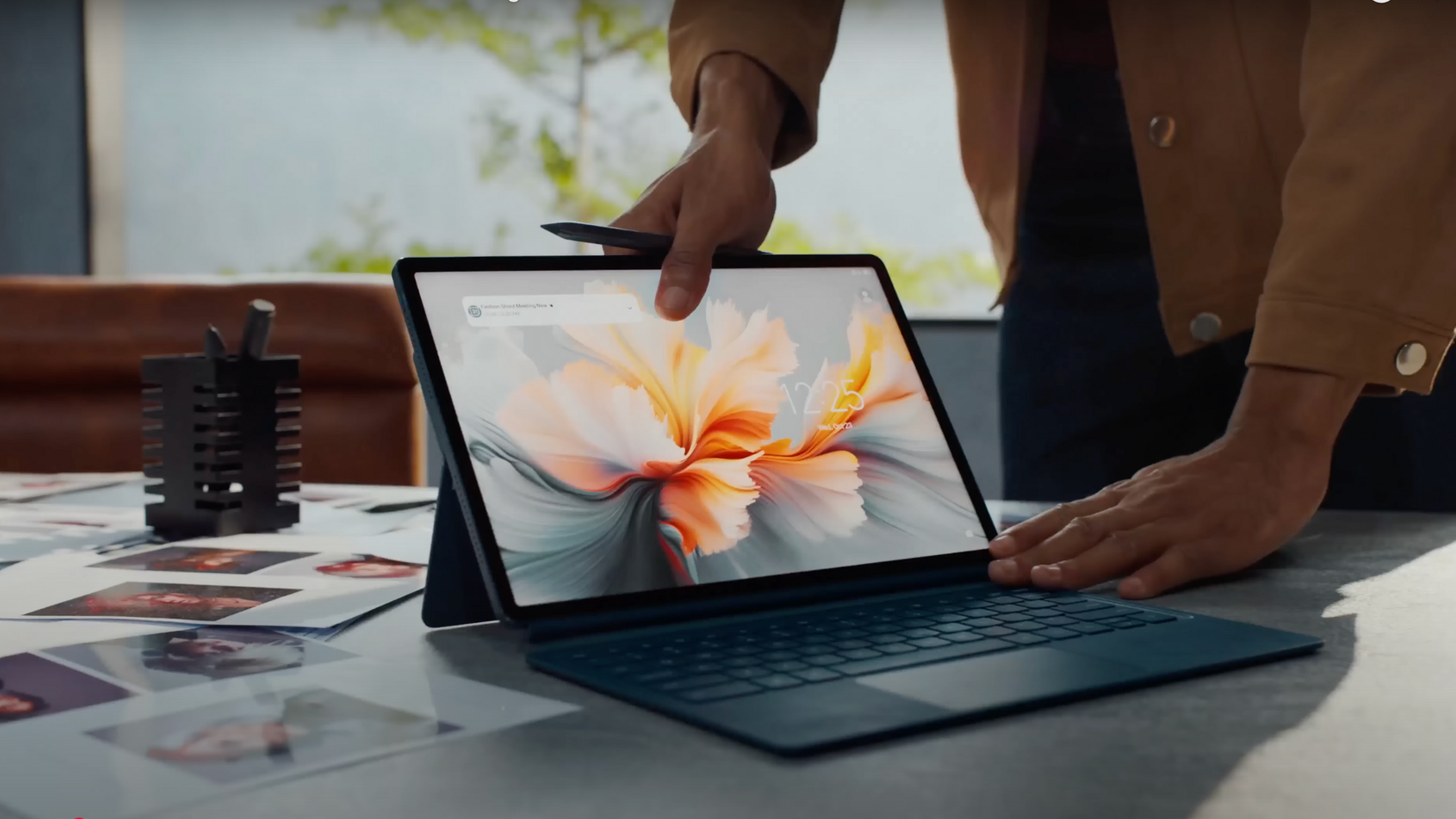
Lenovo was the only top vendor to grow, with shipments up 27%. Omdia says part of that came from retailers stocking up ahead of expected price increases, so it may not fully reflect buyer demand.
In an October 2026 r/GalaxyTab thread, several Tab S9 and S10 Ultra owners said they would keep their tablets instead of upgrading.
One S10 Ultra owner said they considered getting the S12 through a trade-in deal until they noticed the anti-reflective coating was gone. Others are considering Lenovo’s Legion and Yoga tablets as their next purchase.
While Samsung still ships more tablets than Lenovo, a bigger drop than the market average is a bad sign for a brand that keeps removing features.
What Samsung should bring back
Component shortages can explain some of the absurd pricing, but Samsung started cutting features in 2025.
If the S12+ is going to cost $1,199.99, it needs the Bluetooth S Pen, anti-reflective glass on every model, and a base 11-inch option.
Until then, I’ll stick to the S9 until it can no longer be used or even get an iPad, which already looks like better value than the Galaxy Tab S11.