Google can’t get through a keynote without saying Gemini, and the idea behind it is that your phone and your media apps should behave like one brain. Fine.
<!–
Join Android Police now to
–>
<!–
Sign in or create an account to unlock all features and enjoy the full Android Police experience.
–>
Unlock Personalized Content & Exclusive Features For Free
Engage in discussions in Threads
Follow and Like top authors, topics, and trends
Browse with fewer ads across the site
Personalize your profile to showcase your activity
Get a content feed tailored to your interests
By creating an account, you agree to our Terms of Use and Privacy Policy.
You also agree to receive our newsletters; you can unsubscribe any time.
<!–
Log in – Create an account
–>
<!–
Unlimited Access & Enable All Features!
–>
<!–
Unlimited Access • All Features • Full Experience!
Please provide your email address to finish creating your account.
<!–
Create an account
–>
*Required: 8 chars, 1 capital letter, 1 number
or
By creating an account, you agree to our Terms of Use and Privacy Policy.
You also agree to receive our newsletters; you can unsubscribe any time.
So why is one of Android’s most context-aware fitness features coming from a Swedish music company?
In August 2026, Spotify brought its AI-powered Running Mode to Android, rolling it out to Premium subscribers in seven markets, including the US, Canada, and the UK.
Running Mode generates a playlist and structures your workout around it, and it even talks you through the run as you go.
That’s the kind of connected experience Google has been describing on stage for some time now, and I bet it stings Google that Spotify came up with this feature first.
How Running Mode builds a soundtrack around your cadence
Four choices to set up your run
Credit: RUN 4 FFWPU – Pexels / Google
You’ll find Running Mode inside Spotify’s Fitness hub. Setup takes about a minute and involves four decisions.
You start by picking one of 25 running presets. Some are as basic as a 20-minute Just Run. Others are pyramid routines and interval sets.
From there, you set a duration and target beats per minute for your cadence. Spotify says 160 BPM is the most popular pick, but faster athletes can push it to 180.
Then you describe the music you want using the Prompted Playlist integration.
Spotify takes that information and builds a soundtrack matched to your tempo, moving between tracks without dropping you into a rhythm change.
Optional English audio cues are also available. When they’re on, a voice cuts in over your music to guide your warm-up and hard efforts, then eases you into a cool-down.
Running Mode follows your plan and not your body
The playlist doesn’t know you’re struggling
Credit: Lucas Gouveia / Android Police | Roman Samborskyi / Shutterstock
It’s plan-based, and that’s limiting. The soundtrack is built around the tempo you chose before you tied your shoes.
Your cadence can fall apart on a hill, and the music will keep going at the tempo you picked in the app.
Also, catalog matching can get shaky if you ask for a niche genre at a specific tempo.
Not to mention, this feature needs your phone. Spotify’s Wear OS app can play downloaded music on its own, but it doesn’t offer Running Mode sessions.
Running with Google means stitching the pieces together yourself
YouTube Music hasn’t built anything like this
Credit: Lucas Gouveia / Android Police
Disjointed is the polite word. YouTube Music gives you static workout mixes and whatever you curate yourself.
Its recommendation engine also shares a history profile with your YouTube videos, so the videos you watch can bleed into what YouTube Music plays.
You can track your run there and turn on voice cues for pace and distance, but they sound robotic, and on my runs they’ve cut out when Spotify is playing
Every part of a better running coach already belongs to Google
Live telemetry is the Spotify gap that Google can easily fill because Alphabet owns the whole stack.
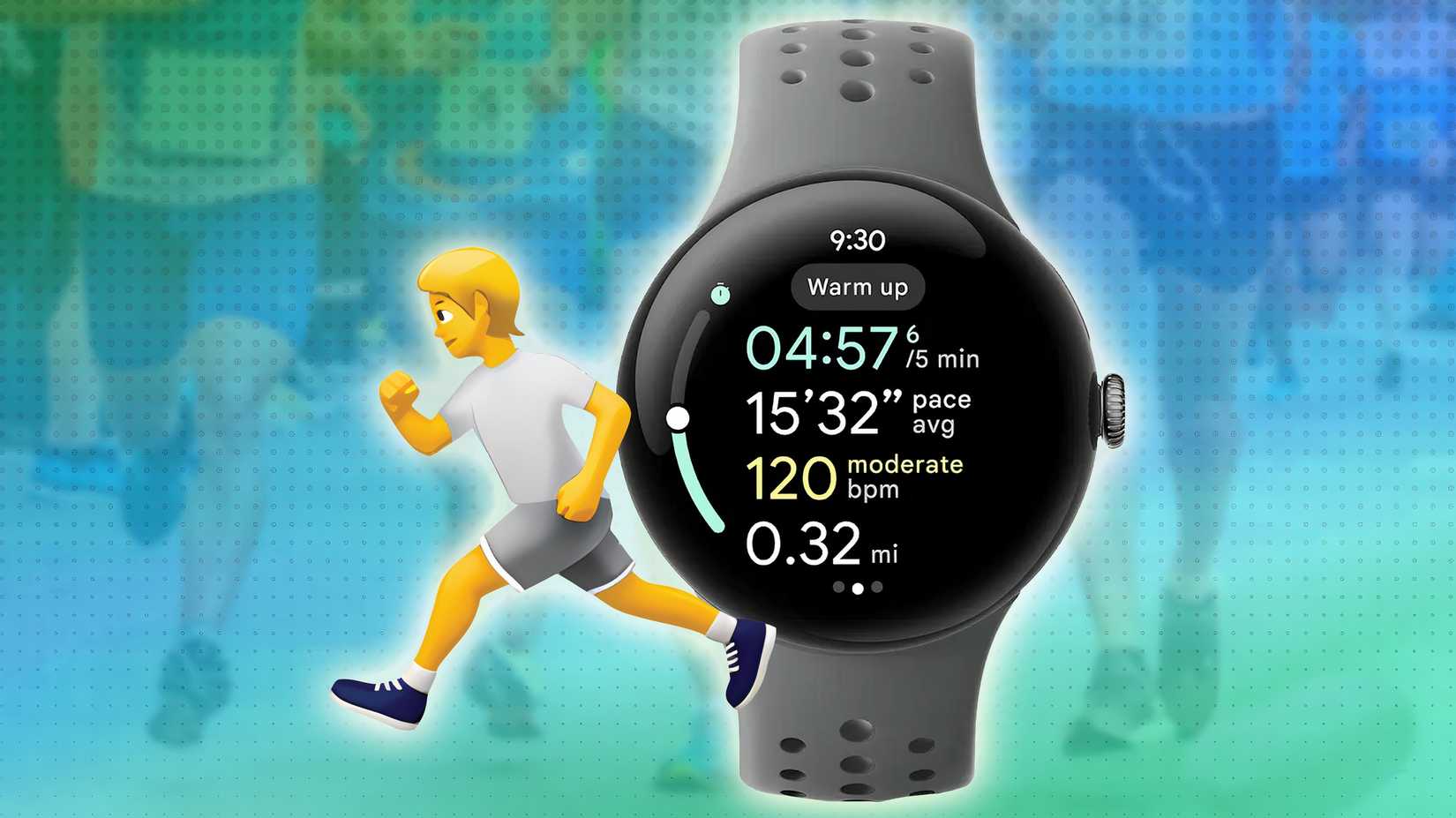
Google controls Android. It builds the Pixel Watch 5, a wearable powerful enough to run demanding AI tasks.
Google owns the workout tracking algorithms and years of health data. On top of that, it has Health Connect for passing live biometrics between apps and YouTube Music with its generative playlist tools.
It doesn’t need a new product here. If it connected YouTube Music to Google Health Coach, we could have a running feature that easily beats Spotify’s.
So yes, a Health Coach that reads your heart rate and tells YouTube Music to change tempo doesn’t sound like a fantasy to me.
Put that into Health Premium and the feature sells itself. Will Google build it? I wouldn’t count on it soon.
Getting three divisions to agree on a roadmap is a tall order. Until that happens, the best running coach on Android is a music subscription.