


As someone who grew up in a small French city, I’ve never been very good at learning the language, despite years of schooling.
I excelled at grammar and reading comprehension, but was always held back by the conversational part of learning French.
That’s because I’ve always been self-conscious when practicing with native speakers. I worry about my pronunciation and my accent.
This barrier made me give up on taking in-person language courses.
I’ve tried to hold onto the language by using learning apps and programs. I worked with Duolingo, Rosetta Stone, Memrise, and even Google Translate.
While these helped my vocabulary, they didn’t address my confidence in speaking. I could learn to talk formally, but I wanted to learn more about everyday, practical phrases.
Then I decided, what happens if I try AI for language learning?
I recently found an app that also works well in the browser, so I can practice a bit in between tasks on my Chromebook.
The platform is LanguaTalk. It’s a language-learning platform that uses AI to help mimic human speech.
So far, even if the free model has been limited, the conversational practice has been great.

LanguaTalk customizes your language learning experience
Getting started took less than a minute
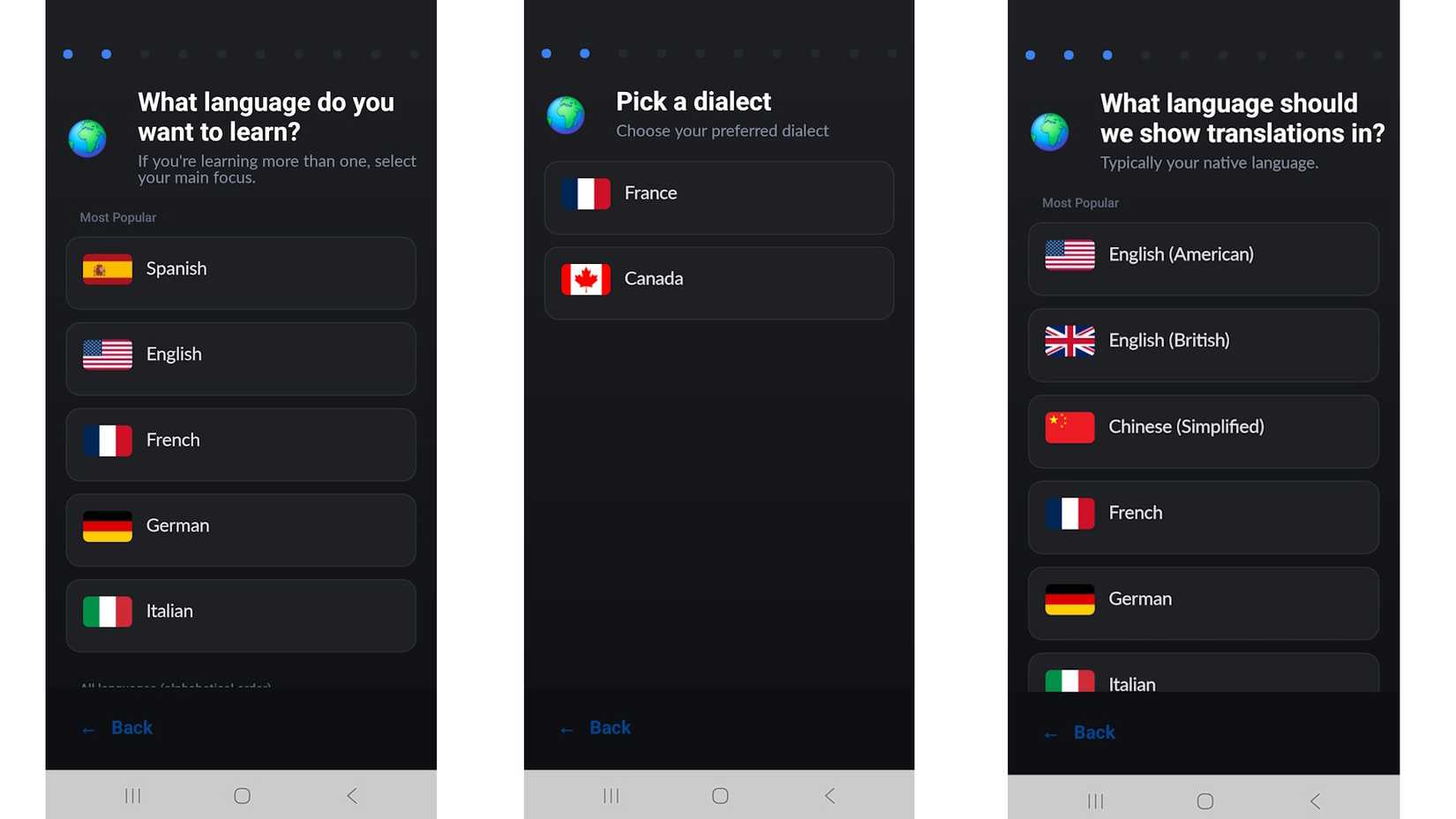
As someone trying to pick up French in Canada, one of the toughest parts of using a language learning app is finding one that supports the Canadian French dialect.
After you’ve picked a language you’re trying to learn, you can choose the translation language and then the learning language level.
From there, the app assesses why you want to learn the selected language (how you plan to use it), your hobbies and interests, and how often you can practice your chosen language.
For me, I have to be realistic about the fact that I can’t be diligent enough to practice every day, which is one of the reasons Duolingo just didn’t work well for me.
LanguaTalk offered a one to two days a week option, which made the most sense since my free time is on the weekends, when I am guaranteed time to practice.
You can also customize the sessions. For me, 10 minutes hit the sweet spot, but others might require longer.
The app then greets you with a tutorial video outlining what to expect and the format. It also warns that you need to practice in a quiet room to get the most out of the AI.
I found that this wasn’t too strict, since I have two loud golden retrievers that bark at every noise, and even with that, the app still worked properly.
When you’re in the app, you can customize the settings. You can re-select the language you are learning, along with the dialect, translations, and level.
If you don’t like the default AI tutor you’re provided with, tap the profile speaker icon next to Chat Settings to change it.
I like changing my speaker to mimic different groups for extra exposure.
Overall, I was floored by how good the AI sounded. Its pronunciations felt human-like, and it felt like I was talking to another human.
It turns out that’s exactly what I needed to feel comfortable.
Why I chose to stick with LanguaTalk
The learning format was easy to pick up
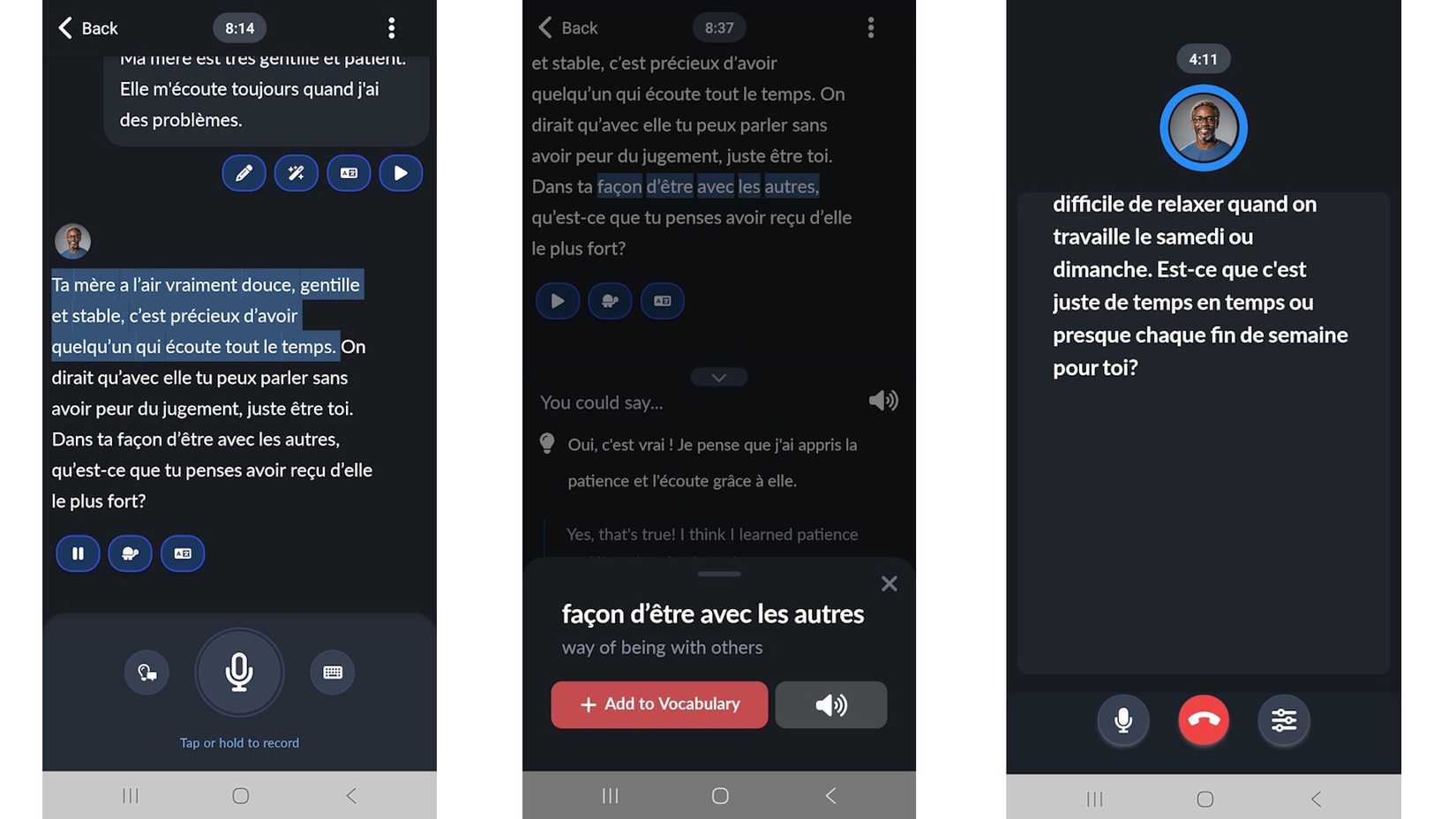
What I like most about the platform is how non-judgmental it feels.
When the conversation was hard to follow, I could tap a button to slow the AI’s speech, and I did so without limit.
Plus, sometimes I just feel stuck in the middle of a conversation, and I can’t keep up because I don’t know the French terminology for things.
When I don’t know how to respond, I use the AI’s guided mode to show me an example of a good reply. Then toggle it off when I feel more confident later.
There are also alternative phrases to see what other replies you can use by selecting the magic-wand icon, in case you want to see what else can be said for a scenario (you can choose roleplays).
Choosing a scenario or a topic really helped a lot. There’s a dedicated section where you can review the history of a chat (you can also technically record your conversations).
Something I don’t often see in a more structured language-learning app is the ability to have conversations that include slang.
Slang is one of the major roadblocks when I am trying to learn a new language; most people use it when they speak. But many of the language-learning platforms I’ve used focus on the language’s formal style.
Another feature I liked is the integrated flashcard format (you don’t even need a separate flashcard app).
So even if I only have five minutes while waiting for a download or while finishing cooking, I can refer to the flashcards to improve my vocabulary.
But you can only earn flashcards during your chat sessions with the AI. Tapping the plus button adds it to your flashcards.
I did this whenever I chose alternative responses during the chats or when I didn’t know a word.
The last main feature that I ended up liking is the report.
When you have a conversation with at least six replies, you can get AI feedback after you finish a session. It outlines what you did well, areas for improvement, corrections, and a cultural tip.
The report was an overall confidence booster. It helped me gain more confidence while giving me a bit more of a focus point for my upcoming sections.
There would be words I struggled to pronounce, or I would use the wrong adjectives. This is included in your report, which also includes some suggestions on how to fix it.
LanguaTalk is mostly a premium service
The only issue I have with recommending LanguaTalk to everyone is that it’s only freemium at best.
You have a limited number of attempts to talk to the AI each day, which might not be very helpful if you need longer sessions to get it down.
But as someone who has little time to practice, this wasn’t a major problem for me.
If you find you need constant practice, you can try the LanguaTalk Pro tier on a free trial, or take a look at other language learning apps with fewer restrictions.
Duolingo isn’t the only language app in town. You’ll find some nice alternatives to Duolingo that don’t feel nearly as predatory.










