


The Google Pixel 10 Pro is a flagship phone, but don’t let that kid you into believing it’s just as powerful as its flagship-tier competition.
The Pixel’s hardware simply isn’t the match of equivalent processors from Qualcomm, often struggling to beat two-year-old Snapdragon processors.
For the latest models, Google even went as far as to justify it, claiming the Tensor G5 is optimized for AI, whatever that means.
But I was content
Like my colleague, Stephen Radochia, I believed the Pixel 10 Pro was just fine as it was.
Until I tried to expand my boundaries — at which point I ran into a completely different one.
With everything I knew about the Pixel 10 Pro, I was entirely ready to blame my phone for the failure. But then, I looked a little deeper, and learned a very important lesson.
I’ve always wanted to game properly on my phone

I’ve always liked the idea of my smartphone being a cool gaming device.
After all, it ticks all the boxes you need for a gaming device: a powerful processor, plenty of hard drive space, and tons of support for accessories like gamepads and external hard drives.
Except, some part of it has never sat well with me.
The lack of haptic feedback from on-screen controls made them unusable for a retro boy like me, and I hated the awkward cradles of Android game controllers. It worked, but usually wasn’t worth the trouble.
But I never stopped thinking about it, and over time, I collected a number of actual games on my phone that I never played.
While I wasted time on idle cookie clickers, Knights of the Old Republic, Red Dead Redemption, and Baldur’s Gate II stared at me with utter contempt.

And then the Abxylute M4 came into my life. A magnetic clamp for easy attachment! A small controller that’s easy to tuck away!
On the face of it, this is the perfect gamepad for me.
I was excited to get it going, and when it arrived, I dived straight into the Netflix edition of Red Dead Redemption.
Old habits die hard

Every game I tried ran well, and the performance was good. Dead Cells ran well, and while there was a little bit of slowdown in Red Dead Redemption, it was minor enough I could ignore it.
On the whole, a positive first experience, and seemingly, vindication for Google’s approach to hardware.
But that wasn’t everything. Shortly after I ended the game and put down the controller, I noticed something a little odd.
My device was restarting.
I hadn’t restarted it, and I hadn’t done anything that would cause it to restart. It had just rebooted. By itself.
And that was worrying. Because only a few things could have caused it.
I set to testing immediately. Just playing the games didn’t cause it to restart, and neither did attaching the gamepad’s magnet and taking it off.
No, it only restarted after playing a game with the controller connected.

I was flummoxed. Normally, I’d assume the culprit in this sort of reboot cycle was to do with rising temperatures.
This was a tempting avenue of blame.
Previous generations of Tensor processors had really struggled with overheating, so this seemed like an easy answer. It was overheating because the underpowered processor was working too hard.
But it wasn’t a perfect solution. I’m not a human thermometer by any means, but usually an overheating phone will feel, um, hot. My Pixel wasn’t.
Plus, it only did it when the controller was attached. Run the games with on-screen controls, and personal revulsions aside, the game runs fine, and the phone doesn’t reboot.
At this point, I did what any responsible tech owner would do — I reached out to the Abxylute community.
And I got an answer.
It was far simpler than I’d thought, and an easy fix.
The problem existed between the phone and chair

It was me. The problem was me.
In the years I’ve spent playing with tech for a living, I’ve seen a lot of Bluetooth-connected gadgets. And as such, I’m fairly confident about how they work.
Hold down a button, wait for the fast flashing lights, and then connect on your phone. Simple. Easy. Done.
That’s exactly what I’d done with the Abxylute M4. I was confident I knew what I was doing, and in my hubris, I hadn’t read the manual.
It turns out the M4 has multiple modes, and the pairing process is different for each one.
The mode I was using, in my arrogant ignorance, was the Pro mode, when I should be using the PS mode.
I removed the accessory, repaired it correctly, and it works now. No more reboots.

What I originally thought was an exploration into a faulty accessory turned out to be an examination of my own hubris.
If I’d settled down and done my due diligence before diving in, this wouldn’t have happened.
Do I know why using Pro mode makes my Pixel behave in this way? Not at all — but I don’t really need to know.
The manual specifically tells me to use one mode, and if using a different one causes my phone to break, well, that’s on me, not Abxylute.
Read your manuals, folks. Even when it’s something you think you should know about. I’m eating my humble pie publicly, so you don’t have to.
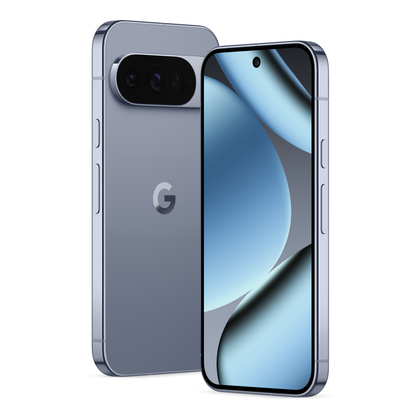
Google Pixel 10 Pro
- SoC
-
Google Tensor G5
- RAM
-
16GB
- Storage
-
128 GB / 256 GB / 512 GB with Zoned UFS / 1 TB with Zoned UFS
- Battery
-
4870mAh
- Operating System
-
Android 16
- Front camera
-
42 MP Dual PD selfie camera
Google’s latest Pro Pixel packs a faster yet efficient Tensor G5 chip, an upgraded ISP, and a brighter display. Plus, an array of new AI features that make it one of the best Android phones to launch in 2025.










