

On 28 November 2026, the Motorola Fone F3 will celebrate its 20th anniversary. What’s the Motorola Fone F3, I hear you ask? It was the first e-paper phone ever!
Designed to appeal to low-end markets, the Fone F3 struggled to succeed despite its rock-bottom price ($32.74, adjusted for inflation).
The problem was that the e-paper display oversimplified basic tasks like SMS texting, and it was phased out by 2009, by which point Amazon had launched the Kindle.
Fast-forward to 2026, and e-paper devices are ubiquitous.
E-readers are the most common place to find the technology, but we’re now finding it on phones, smartwatches, and digital picture frames.
At CES 2026, I saw plenty of these devices in person, but despite their proliferation, I’m slightly skeptical of their future.
I want more e-paper devices, but manufacturers will have to play their cards carefully to build long-term success.
The state of e-readers in 2026
The best devices are just better iterations of those we saw a decade ago
Before I discuss some of the more interesting applications of e-reader technology, let’s examine the humble e-reader.
Amazon’s first Kindle was a phenomenal success when it launched in 2007. It sold out in 5.5 hours and remained out of stock until April 2008.
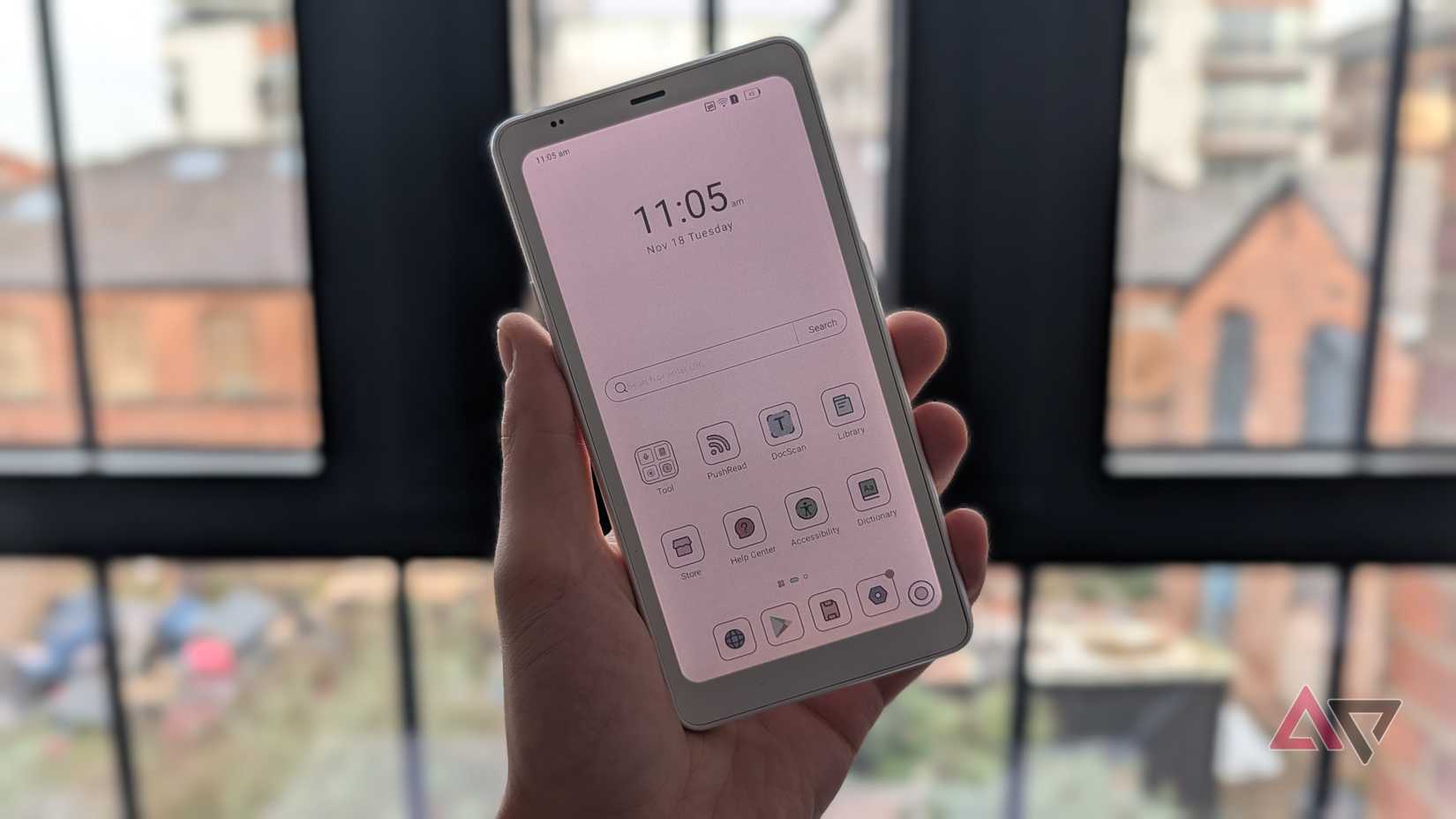
Since then, e-paper technology has advanced substantially. A recent example is the Boox Palma 2 Pro.
This Android e-reader offered a color display on a smartphone-sized device, but I walked away underwhelmed.
Boox had tried to innovate, but it was held back by inadequate hardware and the limitations of e-paper technology.
While I think Boox should have offered better hardware, a significant problem is the technology itself.
E-paper devices are locked in the past. Just take a look at the Kobo Clara BW. This device wouldn’t have looked out of place in 2010, yet it was one of our favorite e-readers in 2025.
The Kobo Clara BW succeeds because it’s simple. There’s no attempt to compete with smartphones by offering the full Android experience, and it has no support for note-taking.
While it might suggest that the only real application for e-paper technology is on e-readers, thankfully, this isn’t the case.
How to make a successful e-paper phone
Don’t try to imitate a flagship Google or Samsung device
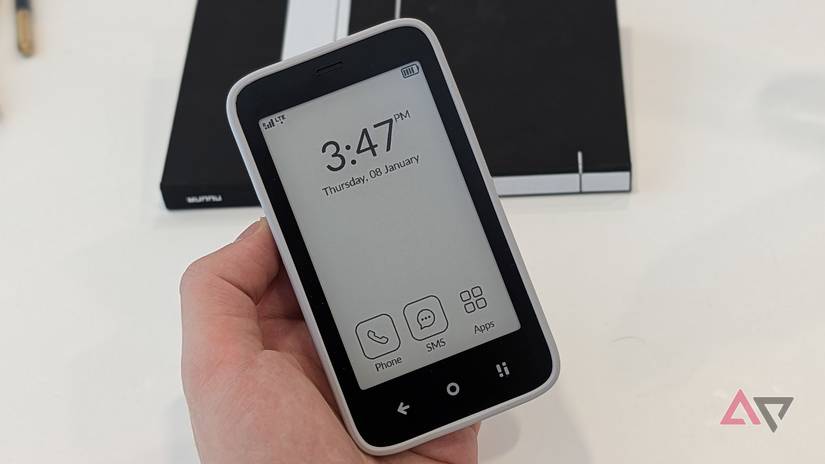
At CES 2026, I went hands-on with the Mudita Kompakt, a privacy-first, minimalist phone designed to give you the necessary parts of the smartphone without the feature bloat.
There was a lot to love about this device, especially its performance. Pre-installed apps loaded quickly with minimal flickering, and even sideloaded apps like WhatsApp and Spotify worked without hassle.
The Kompakt succeeded where the Palma 2 Pro failed because it didn’t try to imitate a smartphone with an OLED display.
Its custom OS was built with e-paper displays in mind, so I didn’t get frustrated with performance as I did with the Palma 2 Pro.
However, what struck me about the Kompakt was that it felt like the best e-paper device I’ve used. That’s great for Mudita, but an ominous portent for the future of e-paper devices.
Even if Mudita ditched its privacy-first commitment, it would struggle to build a smartphone that could compete with Google or Samsung’s flagships while it uses e-paper displays.
If manufacturers try to imitate OLED-equipped phones with e-paper devices, they will fail.
However, as I saw at CES 2026, there is plenty of room for e-paper devices in 2026 and beyond.
Mudita proved that an original approach to a phone can work, and Pebble proved (again) that wearables are the perfect area for e-paper innovation.
Look to smartwatches for e-paper innovation
Another fantastic place to find color e-paper devices
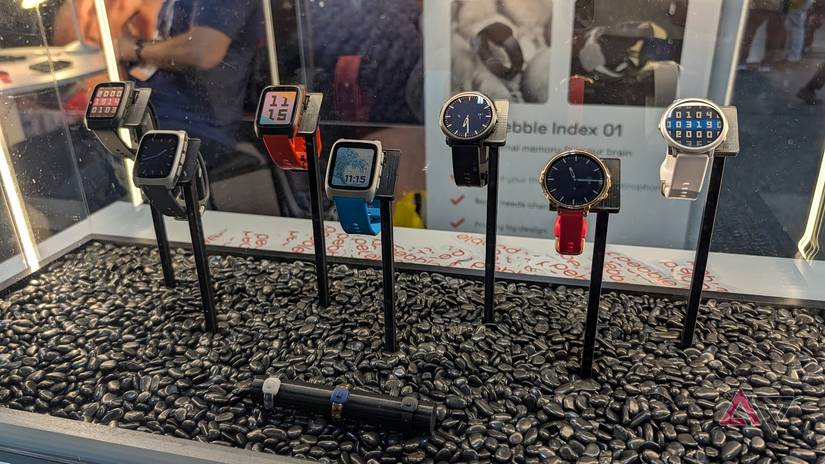
Hopefully, you’re aware of Eric Migicovsky’s resurrection of the Pebble brand by now.
I went hands-on with the Time 2 and Round 2 smartwatches at CES 2026, and it was my first experience with an e-paper smartwatch since I tried the original Pebble watch over a decade ago.
I was seriously impressed, so much so that I walked away with a pre-order confirmation email for the Round 2.
There’s a lot to love about the new Pebble devices, but what struck me was their e-paper displays.
Color e-paper displays have historically struggled to match the clarity of black-and-white displays.
However, I believe this is a case of manufacturers trying to put technology where it’s not needed.
We don’t need color for smartphone-sized e-paper devices; we need it for tablets where we read comics or take notes.
Before I tried the Pebble Round 2 and Time 2, I would have said that we also didn’t need color for smartwatches either. I was deeply upset that I missed out on the Pebble 2 Duo because it offered a black-and-white display.
However, the Round 2 and Time 2 showed me that you don’t need to make compromises to offer a color e-paper display.
They’re relatively inexpensive compared to other smartwatches, and the battery life ranges from one to two weeks for the Round 2 and 30 days for the Time 2.
While I only handled prototypes, I noticed no problems with performance or common issues like flickering or ghosting on either device.
I’m used to compromise when handling e-paper devices, but these Pebble smartwatches showed that my expectations don’t need to be low.
I chatted with Eric Migicovsky about the significant differences between the Round 2 and Time 2’s battery lives.
He confirmed this was because he had to reduce the battery size to fit it in the Round 2’s thinner frame.
Don’t fall for headline-grabbing e-paper innovations
Mudita and Pebble showed me that there is still plenty of room for companies to innovate with e-paper technology.
But they won’t succeed by imitating our existing devices; they’ll succeed by trying something new.
So if you want to see innovation for e-paper devices, look beyond e-readers and the household names that dominate tech.







