


It’s 2 in the morning, and the only light in my bedroom is my phone screen. My thumb moves on instinct. Another video plays. A quick meme, then more political outrage.
My eyes burn from the screen. I close the app. I wanted something that could pull me in without swallowing my whole night.
I needed a better addiction. After all, you can’t kill a habit without replacing it, and it didn’t take long for me to see that chess puzzles fit perfectly.

Why doomscrolling always wins the late-night battle
Credit: Lucas Gouveia / Android Police
Doomscrolling dominates because it exploits human neurobiology.
Tech giants built the infinite scroll using the psychological mechanisms found in casino slot machines. You swipe and wait, not knowing what’s coming next.
Funny? Infuriating? Dull? That uncertainty is what sends a hit of dopamine through your brain. Your nervous system chases the promise of a reward and loses track of time.
The interface leaves no pause for thought. There are no break mechanisms. Nothing tells you to stop. You’re the one who has to build breaks.
Admit it. You don’t watch Instagram Reels for the content. You watch to fill your micro-moments of nothingness.
You grab your phone in the elevator, at a red light, or while waiting for your coffee. You numb yourself with superficial stimulation layered over exhaustion. It’s the pacifier of our age.
Chess is the antidote to the dopamine feed
Credit: Pavel Danilyuk / Pexels
Social feeds are dopamine without any effort. You sit back as the algorithm spoon-feeds you bite-sized doses of happiness.
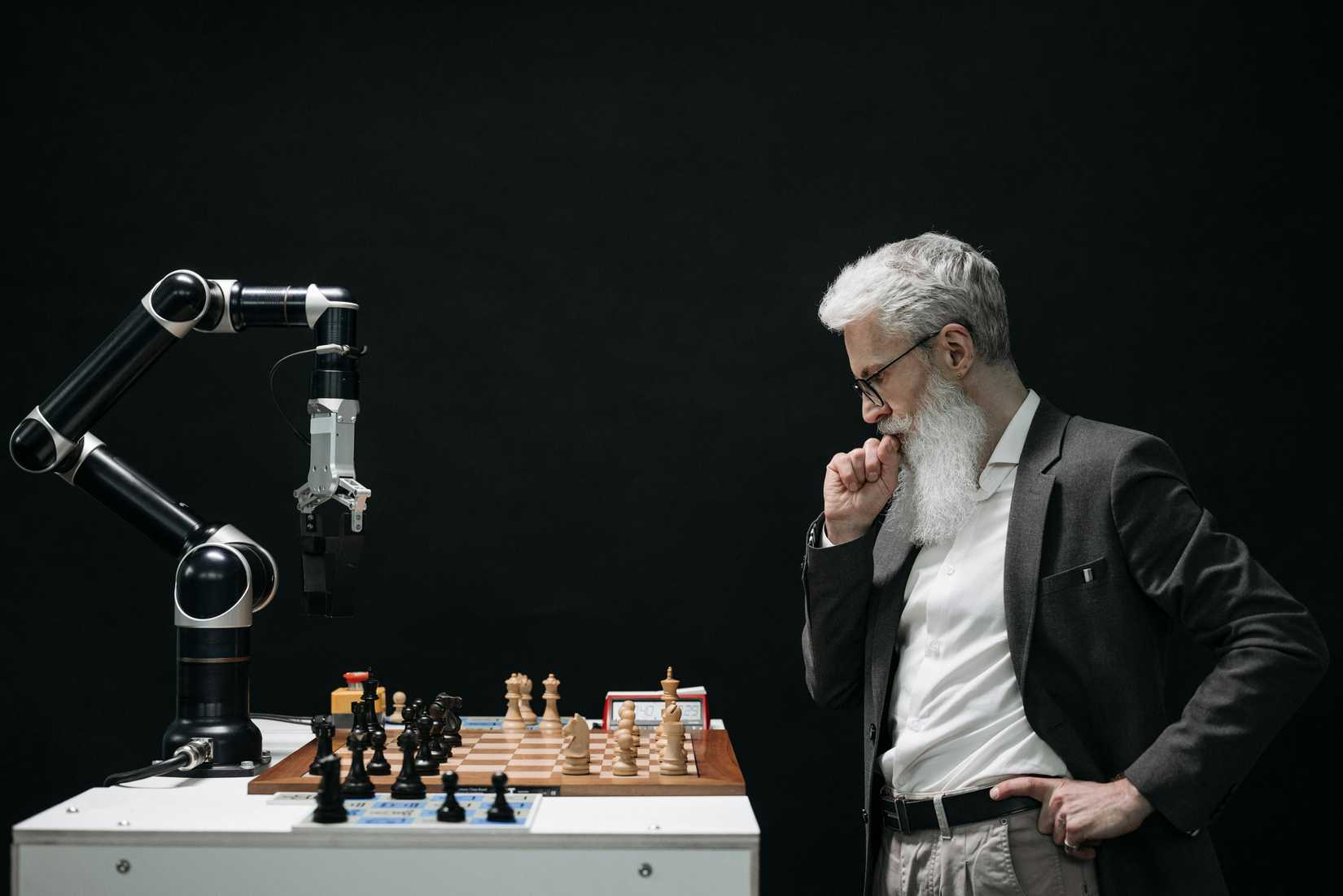
Chess gives you dopamine, but you have to earn it. You look at the board, run through candidate moves, and find a solution.
Dopamine that comes from effort hits differently and lasts longer. Remember the joy that hit you back in high school, when you solved a math problem that had you for hours? It’s the same with chess.
Another great thing about chess puzzles is that they come with an endpoint. You either find the mate-in-two sequence, or you don’t. Either way, the loop closes, and your brain gets its completion signal.
You can’t zombie-scroll a chessboard. If my brain were completely fried, there would be no choice but to put the phone down.
To make the habit stick, I removed Instagram and X and replaced them with Chess Tactics Pro and Chess.com.
What happened when I replaced scrolling with chess?
Credit: Google Play
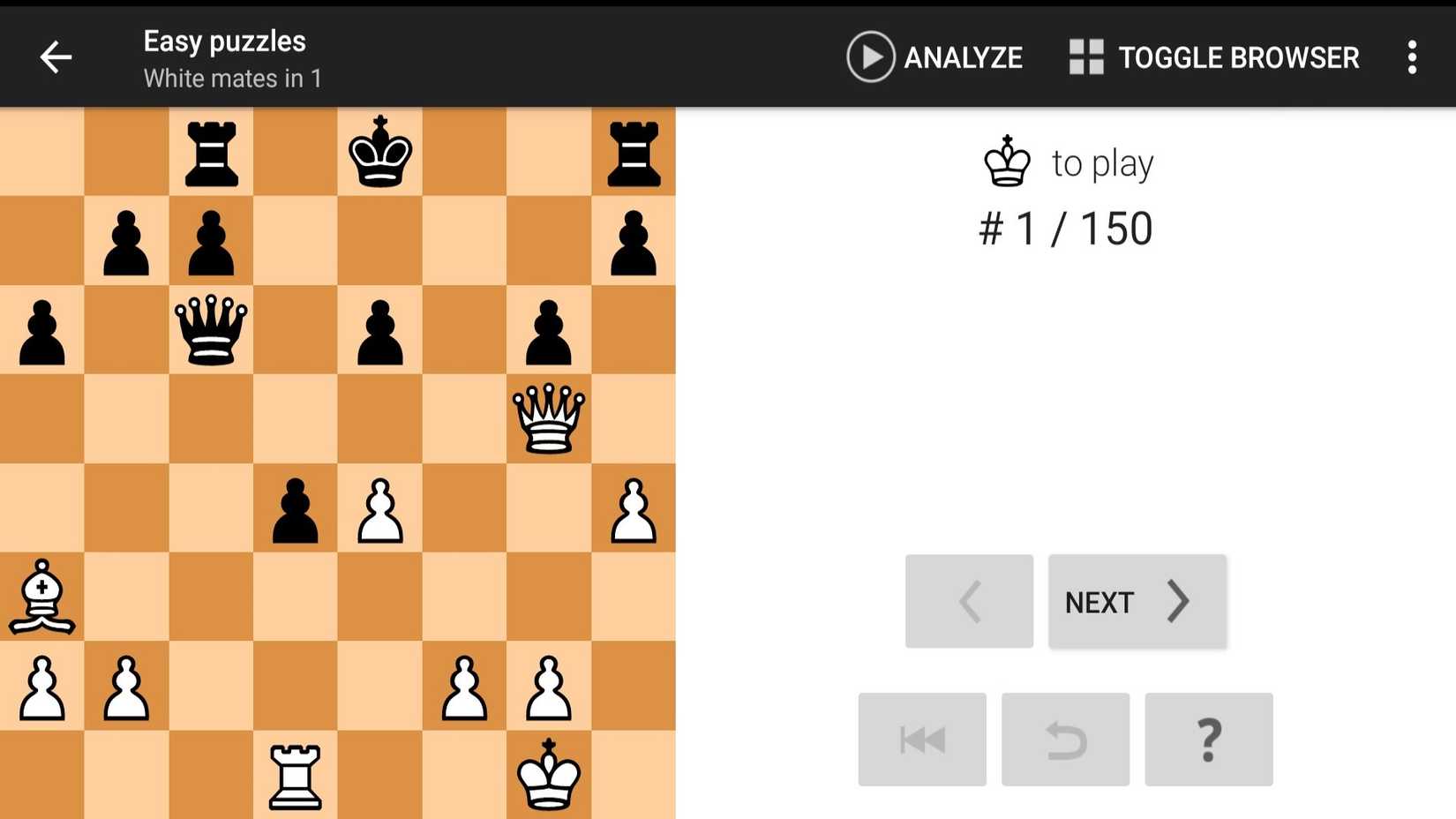
I committed myself to two weeks of solving puzzles. Mate in two. Mate in three. Find the skewer. Pin the queen. I tried two platforms. Both Chess Tactics and Chess.com offer XP, monthly rankings, and a clean UI.
Both get the job done, though I find myself preferring Chess.com. I’m not Magnus Carlsen, and the first few days were mostly guesswork. But I forced myself to slow down.
As the week went on, my brain gradually started using logic to solve the problems.
As I got better and the game grew harder, I started feeling the Tetris Effect. I closed my eyes and saw the 64 squares, visualizing moves until I finally fell asleep.
While my total screen time didn’t drop drastically (I played until my brain couldn’t take it), the quality of that time changed. Social media had dulled me, but chess woke my mind, and I felt sharp again.
The line between addiction and obsession
Credit: Lucas Gouveia / Android Police | New Africa / Shutterstock
So, is this one addiction in disguise for another? I must admit, yes, in many ways. I traded a passive addiction for a high-functioning one.
Don’t get it wrong. Chess platforms are profit-driven SaaS, staffed with retention engineers from the social media playbook. Developers use ELO ratings and daily streaks to keep you hooked.
Sometimes I rage-played. I’d make a blunder, lose ELO, and immediately queue up to win it back. It reminded me of a casino, trying to win back what I’d lost, except here I was paying in time and sanity.
Those rage sessions were more stressful than the numbing TikTok void.
And honestly, sometimes all you want is to turn your brain off. Calculating moves is hard work.
After a long, draining week, puzzles can be too much for a Friday night. Sometimes, you let your brain rot. As long as it doesn’t become a habit, you’re fine.
Turn small moments into mental training
Doomscrolling is a no-exit system, sucking up your attention for profit. Chess, on the other hand, treats your attention like a muscle and trains it.
Next time you reach for your phone to kill five minutes, don’t let a billionaire’s algorithm decide how you spend them.
Open a puzzle or play a quick bullet game. Find the pin. Deliver the mate. Your brain will thank you.










