


Meta has quietly introduced us to its greater plan for smartglasses, and it has used both Oakley and the Super Bowl to do so.
During the 2026 Super Bowl game, Oakley returned to the advertising roster for the first time in 34 years with a glitzy, celebrity-packed, sports-focused promo.
However, it was in a separate conversation with Meta’s head of wearables that the bigger picture was revealed.
Analyzing the ad
More than some flashy graphics
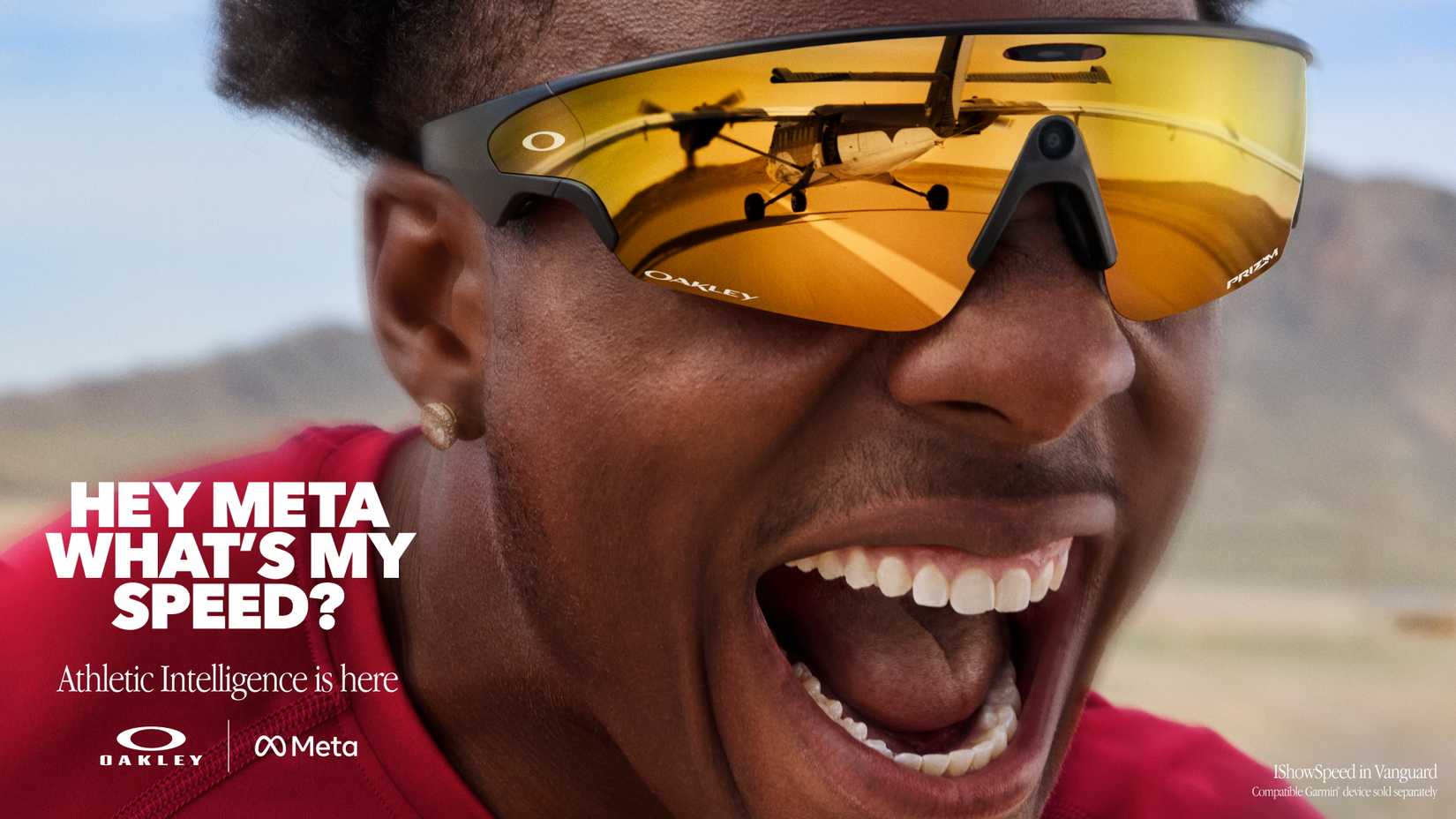
Meta Oakley’s 60-second commercial sees both the Oakley Meta Vanguard and HSTN smartglasses worn by various well-known stars and creators, including Spike Lee, Marshawn Lynch, Sunny Choi, Sky Brown, and iShowSpeed.
Each demonstrates the key features from music playback to voice-activated AI searches, and both the camera and the way it can instantly share images to social media.
Remember these three pillars, as we’ll come back to them.
More obviously, the Meta Oakley smart glasses are shown as the perfect wearable tech partner in sporting, high intensity situations, an intent neatly wrapped up in the tag line “Athletic Intelligence is here.”
Through the exciting ad, targeted demonstrations of Meta’s technology, and Oakley’s position as the on-field eyewear sponsor of the Super Bowl, the pair made it very clear these are smartglasses for the performance-obsessed.
It’s very different to Meta’s 2025 Super Bowl ad for the Ray-Ban Meta. It also used celebrities, but in a chic setting to emphasize style, along with the hands-free benefits of AI visual search.
Not a smartphone or a smartwatch
The big takeaway
However, it’s not Meta’s intention to only show how it has cornered the market in smart glasses for a mainstream audience.
It goes well beyond this, and is part of Meta’s wider plan to introduce smartglasses as a major smartphone alternative, and to ensure the ads we see in the future are right in front of our eyes.
The situations in the ad have been carefully constructed to draw your attention to where smartglasses could replace your smartphone.
This has been Meta’s Mark Zuckerberg’s belief for a while, and using environments and scenarios in the ad where a smartphone simply wouldn’t be as convenient, or even possible as an alternative, underlines Meta’s intention to shift our belief.
Meta’s head of wearables Alex Himel didn’t hide the fact in an interview with advertising industry publication The Drum.
When asked if Meta is trying to replace the smartphone, he said:
We’re pretty bullish. You don’t have to disconnect from the moment to get information or capture what’s happening.
He doesn’t expect smartphones to disappear, but he clearly expects certain features to be offloaded to smartglasses, which the Meta Oakley ad neatly demonstrates.
Remember those three pillars from earlier? Meta likely sees music, photography, and chatting with AI to move from our phones to our glasses.
Are smart glasses the right hardware?
Meta thinks so
Credit: Meta Oakley
Like smartwatches, smartglasses are based on a non-technical product everyone is aware of, which Himel describes as a “low commitment” form factor.
It’s why he doesn’t see some kind of high-tech implant happening any time soon, saying:
We strongly believe in familiar form factors. Years of human evolution have already told us what’s comfortable.
But it’s not just comfort and familiarity that makes smartglasses ideal for Meta’s plan.
It’s how the company considers them the perfect vehicle for AI, and how it plans for smartglasses to change the way we see and interpret advertising.
Smart, frictionless advertising
All with AI assistance

Credit: Meta Oakley
It’s here where the clever marketing around Oakley Meta and Ray-Ban Meta smartglasses starts to make sense.
Meta makes its money through advertising, but Himel said ads will only be possible after it has sold enough pairs, and that will only come after people see the value in them.
Himel explained its plans for advertising, talking about contextual, helpful, real-world ads which use proactive AI to sell products and services.
Remember, this will be in front of your eyes or in your ears, without any need to look down at your phone, and potentially related to product discovery, visual search, and guidance around retail and entertainment locations.
Getting the hardware right
Design first

Credit: Meta Oakley
Understanding Meta’s plan for how it wants to monetize its smartglasses shows the importance of campaigns like Oakley’s Super Bowl spot.
It can’t deliver its ads if no one is wearing smartglasses in the first place, and promoting core functionality to drive adoption is only the start.
Himel said:
We’ve got to get the hardware right – how they look, how they feel – and then keep adding value.
What’s interesting is how this all fits in with comments made recently by Rokid’s CEO Misa Zhu, who said the right balance of display, battery life, and comfort was essential to adoption, and how he expected smartglasses to compliment rather than replace smartphones.
Through partnerships with eyewear brands, isolating features that work well on devices we wear rather than hold, and telling compelling stories in aspirational mainstream settings like sport and lifestyle, Meta is slowly but surely putting its grand plan into action.
It’s going to be fascinating to see how Google and Samsung approach promoting smartglasses later this year, when the pair release their first models, when we will truly start to see if 2026 really will be the breakout year for smartglasses as predicted.











