
I use Android Auto almost every time I get behind the wheel, and for the most part, it does exactly what I need.
However, the more I used it, the more I noticed small things that made the experience frustrating.
Instead of living with these frustrations, I decided to do something about them.
After tweaking a few settings and changing some of my habits, I fixed the four things that bothered me the most.
Wireless Android Auto disconnecting out of nowhere
It ruined my driving experience
Nothing annoyed me more than Android Auto disconnecting in the middle of a drive.
One moment, I would be following Google Maps or listening to my favorite playlist, and the next, my car’s screen would lose the connection.
It was frustrating during long trips when I needed uninterrupted navigation.
After trying different fixes, I realized some of my phone’s connectivity and battery settings were interfering with the experience.
I started by disabling the automatic network switching. On my Samsung Galaxy S25 Ultra, I went to Settings > Connections > Wi-Fi > Intelligent Wi-Fi and disabled Switch to mobile data and Switch to better Wi-Fi networks.
I also made sure Power saving wasn’t active while driving and removed battery restrictions from Android Auto.
Because wireless Android Auto relies heavily on a stable Wi-Fi connection, I wanted to prevent my phone from switching networks or restricting background activity.
These adjustments made my wireless Android Auto connection more reliable.
I no longer worry about losing navigation unexpectedly, and the experience feels closer to the stability I expect from a wired connection.
Android Auto does not use my car speakers properly
Poweramp finally did my speakers justice
My Hyundai has a powerful speaker setup, but I always felt Android Auto wasn’t making the most of it.
Whether I was streaming music through YouTube Music or Spotify, the audio sounded a little flat.
The bass lacked punch, the vocals didn’t stand out enough, and I knew my car’s speakers could deliver a much better experience.
Instead of blaming the hardware, I decided to switch music players.
I switched to Poweramp, loaded my collection of locally stored songs, and started experimenting with its built-in equalizer.
I adjusted the bass, mids, and treble until I found a balance that suited my Hyundai’s speakers.
The difference was immediately noticeable. The bass sounded punchier, vocals became clearer, and my favorite tracks felt much more engaging.
Poweramp didn’t magically upgrade my speakers, but it gave me the audio controls I was missing.
Gemini not understanding my multi-app commands
Pinned commands solved my Gemini frustrations
Gemini is one of my favorite additions to Android Auto, especially because it can handle complex requests involving multiple apps.
However, when my kids are talking in the back seat or the cabin has too much background noise, Gemini voice commands don’t always work as expected.
Thankfully, I found a simple workaround. Instead of relying on voice commands every time, I create custom Gemini Actions for my most frequent requests and pin them to the Android Auto dashboard.
For example, I created shortcuts for commands like “Send my ETA to Sonal on WhatsApp,” “Find nearby fuel pumps,” and “Create a grocery list in Google Tasks for my weekend run.”
I have several other shortcuts for tasks I regularly perform while driving.
Now, instead of repeating a lengthy prompt and hoping Gemini understands it correctly, I can trigger my preferred action with a single tap.
It’s more convenient, especially when the cabin gets noisy.
Google Maps suggesting inconvenient routes to save a couple of minutes
Saving two to five minutes isn’t always worth it
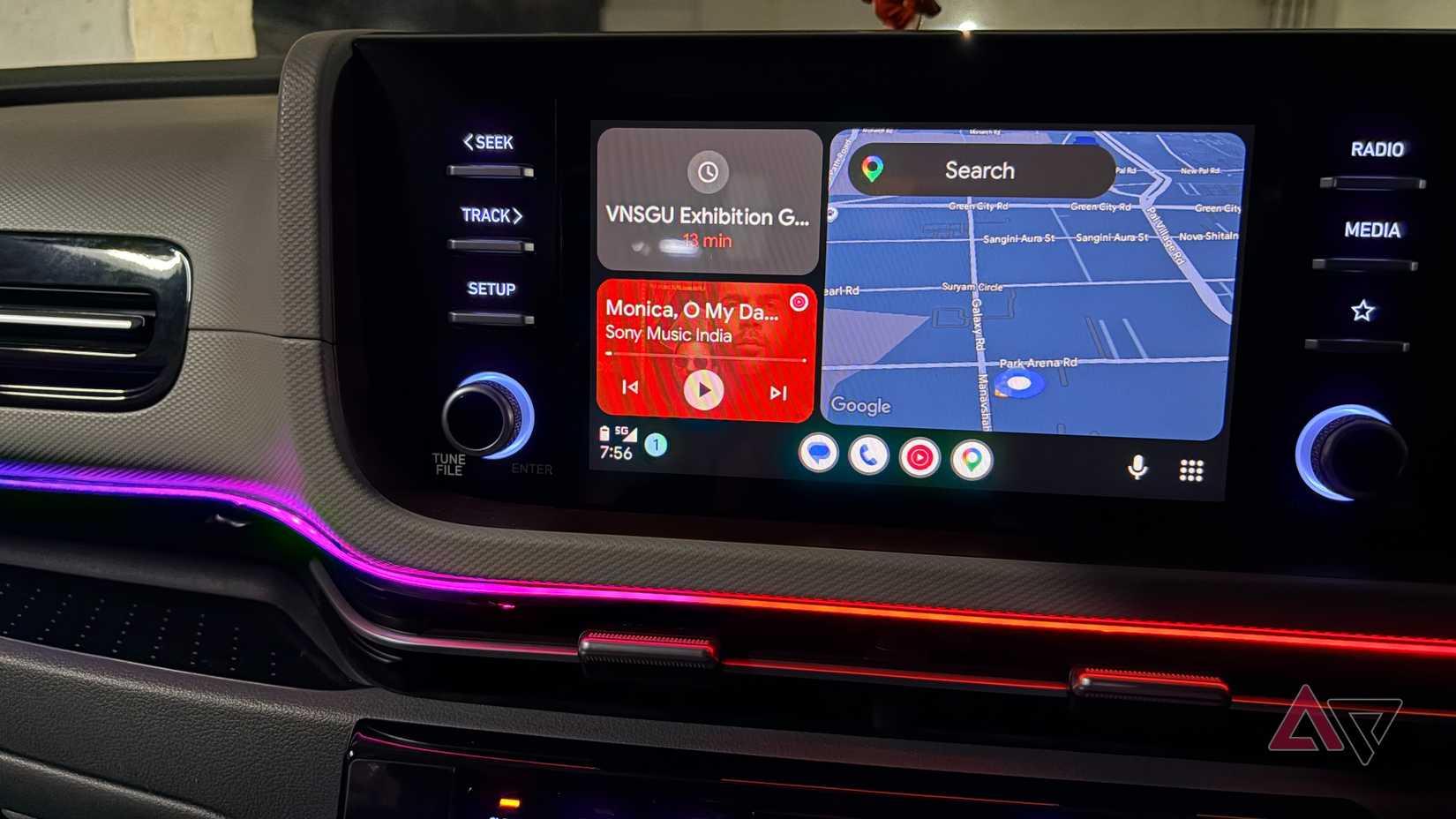
One thing that has always bothered me about Google Maps is its obsession with saving a few minutes on a long drive.
It often suggests shortcuts through narrow lanes, residential areas, and small villages to shave two or three minutes off my ETA.
While these routes may look faster on paper, they aren’t always the most comfortable or practical options, especially when I am driving with my family.
I have learned this lesson the hard way. On several occasions, I followed Google Maps down narrow village roads, only to hit unexpected turns and uneven surfaces.
Since then, I’ve changed how I use Google Maps on Android Auto.
Instead of following every suggested turn, I zoom out on my car’s display to look at the bigger picture.
I also review alternative routes before starting a long journey.
Google Maps is excellent at calculating ETAs, but I have stopped treating its fastest route as the default.
My dashboard finally feels under control
Android Auto isn’t perfect, and I don’t expect Google to fix every little annoyance overnight.
The best part is that I didn’t need to replace my car’s head unit or invest in expensive accessories.
Most of these fixes required only a few setting tweaks and a different approach to using Android Auto.
If you have been dealing with similar frustrations, I recommend trying these changes.