


Even if you keep your Google Home display clutter-free, you’ll still likely see the weather on your home screen.
It provides the temperature and a little icon representing what’s going on in the great outdoors, whether it’s the sun, moon, or snowflake.
Alphabet, Google’s parent company, is pushing its AI-backed weather forecasts for many of its products. It’s received praise for the accuracy of some of its tools that predict hurricanes and other events.
However, Steven DiMartino, owner of NY NJ PA Weather and chair of the American Meteorological Society Board of Digital Meteorologists, still warns against trusting any weather snippets over a human.
“What you get from an actual meteorologist is not only the explanation of the data, but also what to look out for if the forecast starts to go awry,” he told Android Police.

WeatherNext 2 is Google DeepMind’s newest weather forecasting model
It offers AI-driven forecasts up to 15 days in advance

In November 2025, DeepMind announced its latest forecast model, WeatherNext 2. The forecasts are now incorporated into Google Search, Gemini, and Pixel Weather.
Using factors such as temperature, wind, and humidity, WeatherNext 2 can make hundreds of predictions about the weather, according to DeepMind.
For Google Home, WeatherNext 2 provides hourly and daily forecasts, along with MetNet and other models, according to Google.
However, the weather displayed on your Google Home also incorporates warnings and data from other agencies and entities, including the US’s National Weather Service, the UK’s Met Office, and Environment Canada.
Sources may vary depending on where you’re located in the world. Your device’s settings may also affect the forecast you see.
Google DeepMind uses AI to create forecasts
Its weather data seems to increasingly rely on these models
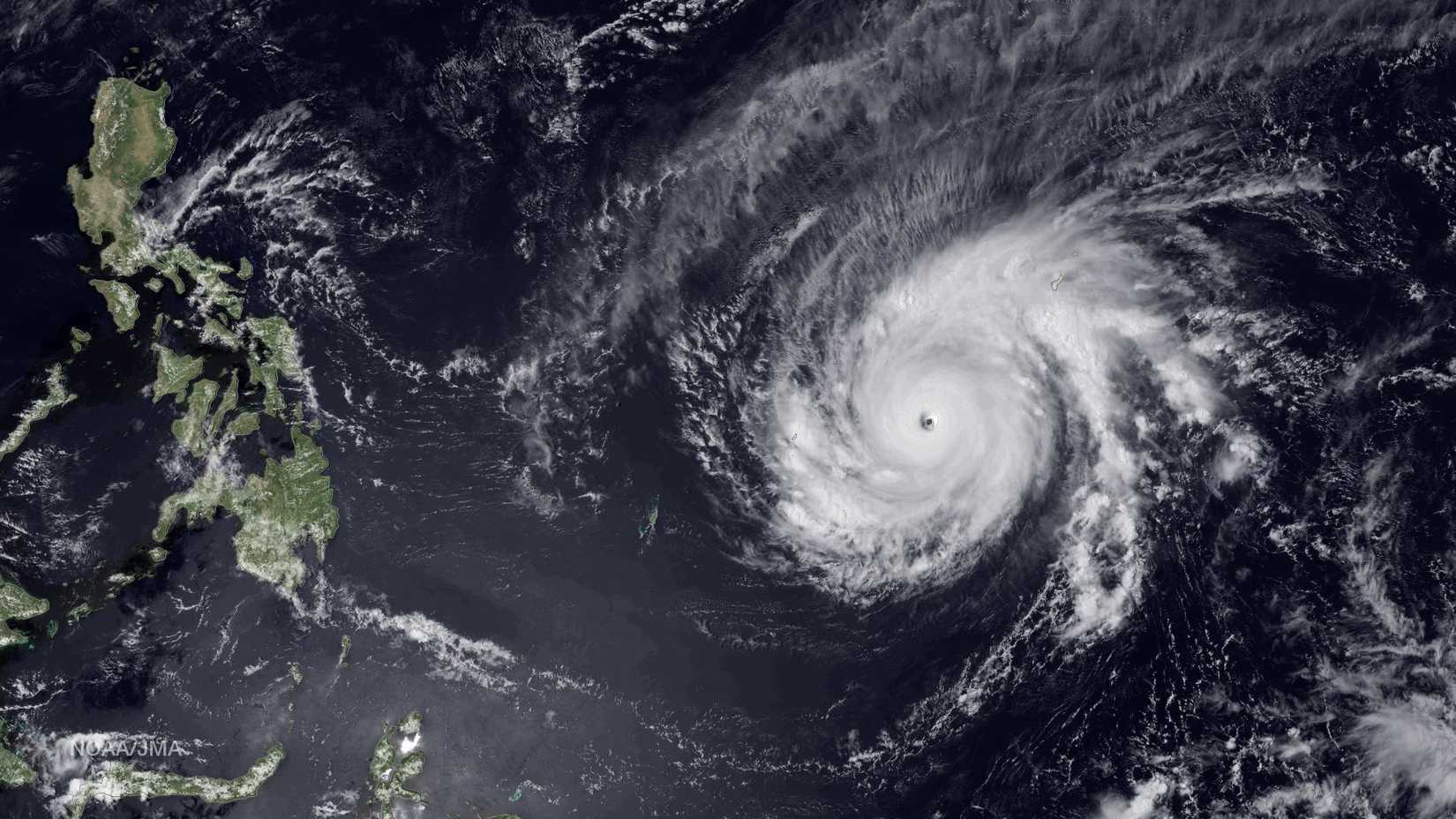
Credit: NOAA/JMA/NESDIS Environmental Visualization Laboratory
Traditional forecasting models use supercomputers and physics equations, along with measurements from weather stations, satellites, balloons, and other tools.
All that data is then used to simulate Earth’s atmosphere and track how the weather might behave in the upcoming days.
AI models don’t need physics or a supercomputer, so they’re faster. DeepMind’s tools create 15-day forecasts in about a minute.
These models use machine learning to find patterns in historical weather data. Based on how storms have developed in the past, they will create predictions about ones that are forming today, NPR reported last year.
It’s proven successful at tracking large-scale weather patterns, particularly hurricanes. In 2025, it predicted Hurricane Melissa’s path and intensification.
In December 2025, the National Oceanic and Atmospheric Administration announced its own trio of AI-backed prediction models that combine DeepMind tools and its own data.
Google Home gives you more than the temperature
You just have to know which questions to ask
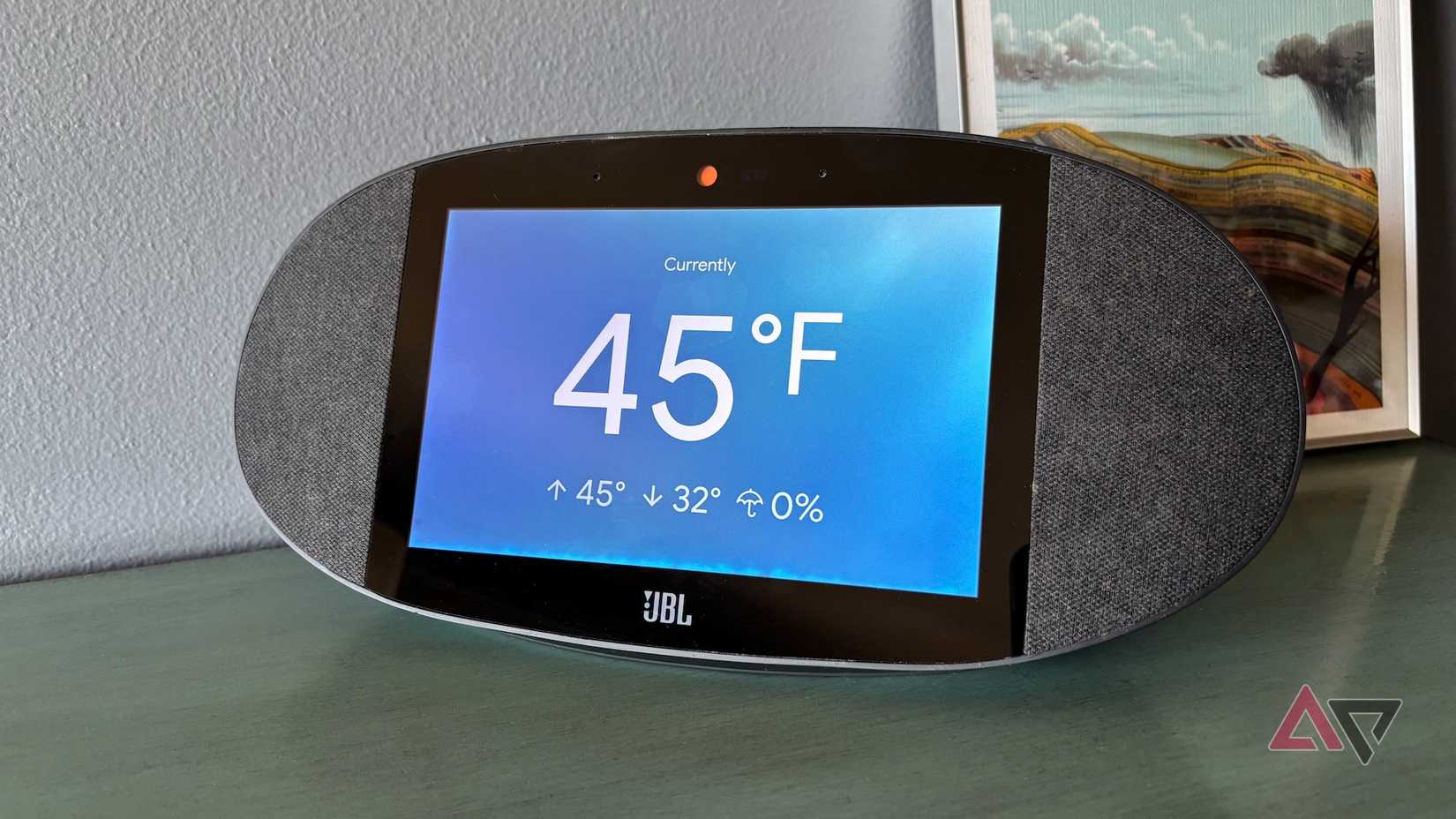
Google Weather collects information from the NWS, the European Centre for Medium-Range Weather Forecasts, NOAA, and more.
Based on these agencies, private companies, and other sources, you can get insight into what the day will bring, from sun exposure to allergy triggers to air quality.
Prepare for sun exposure with the Ultraviolet Index
Know when it’s time to reapply that sunscreen
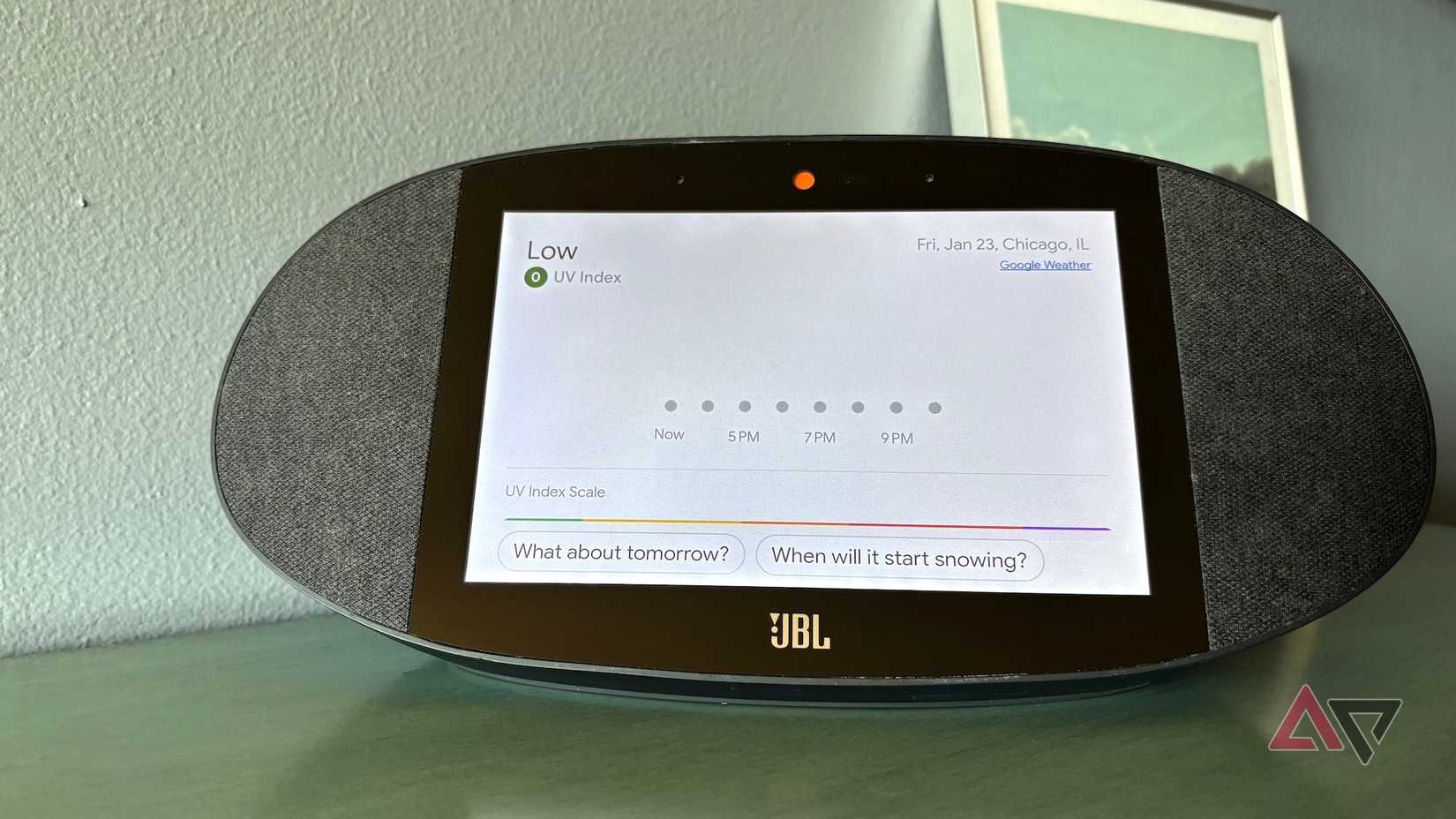
Ask your Google device for the UV index, and it will provide a number from 0 to 11+. On a wintry afternoon, it might say the number isn’t expected to increase that day.
Google Weather uses your location’s cloudiness, time of day, latitude and longitude, and elevation to determine this number. The cloud cover information comes from the same data as its forecasts.
The NWS and Environmental Protection Agency also provide this type of forecasting in the US.
Some countries have access to pollen data
To help answer the eternal question: a cold or allergies?
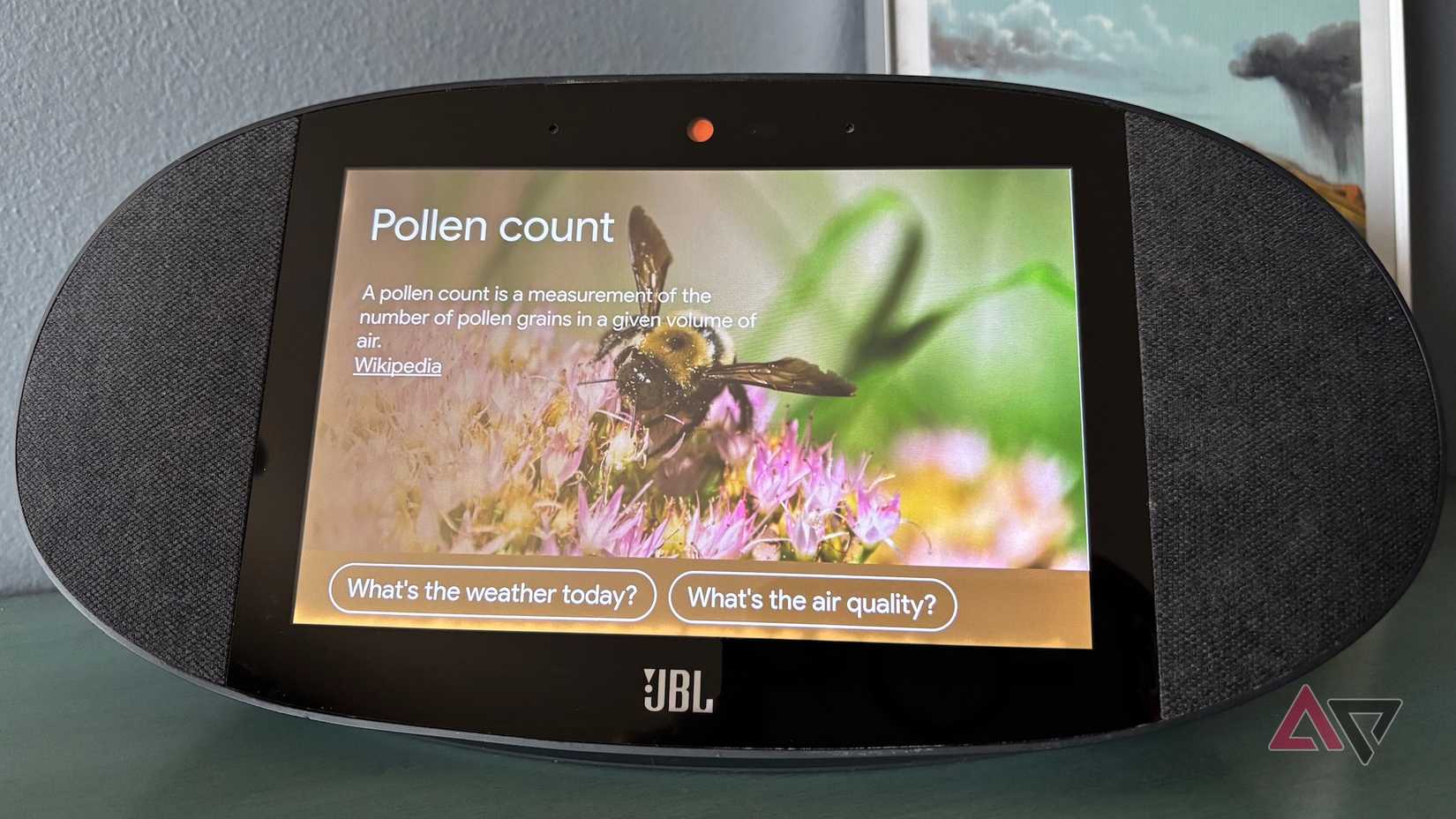
Grasses, ragweed, and mugwort are a few of the allergens that Google Weather offers data for in some countries. Google’s model gives a pollen index between 0 and 4, from none to severe.
The information comes from the UK’s Met Office, Japan’s Ministry of the Environment, and other sources.
Italy, France, and Japan are a few of the countries where Google’s pollen index is available.
Unfortunately, this information isn’t available via Google. Instead, my display just gave me a definition of pollen count.
Get the data on your local air quality
Breathe easier knowing the score
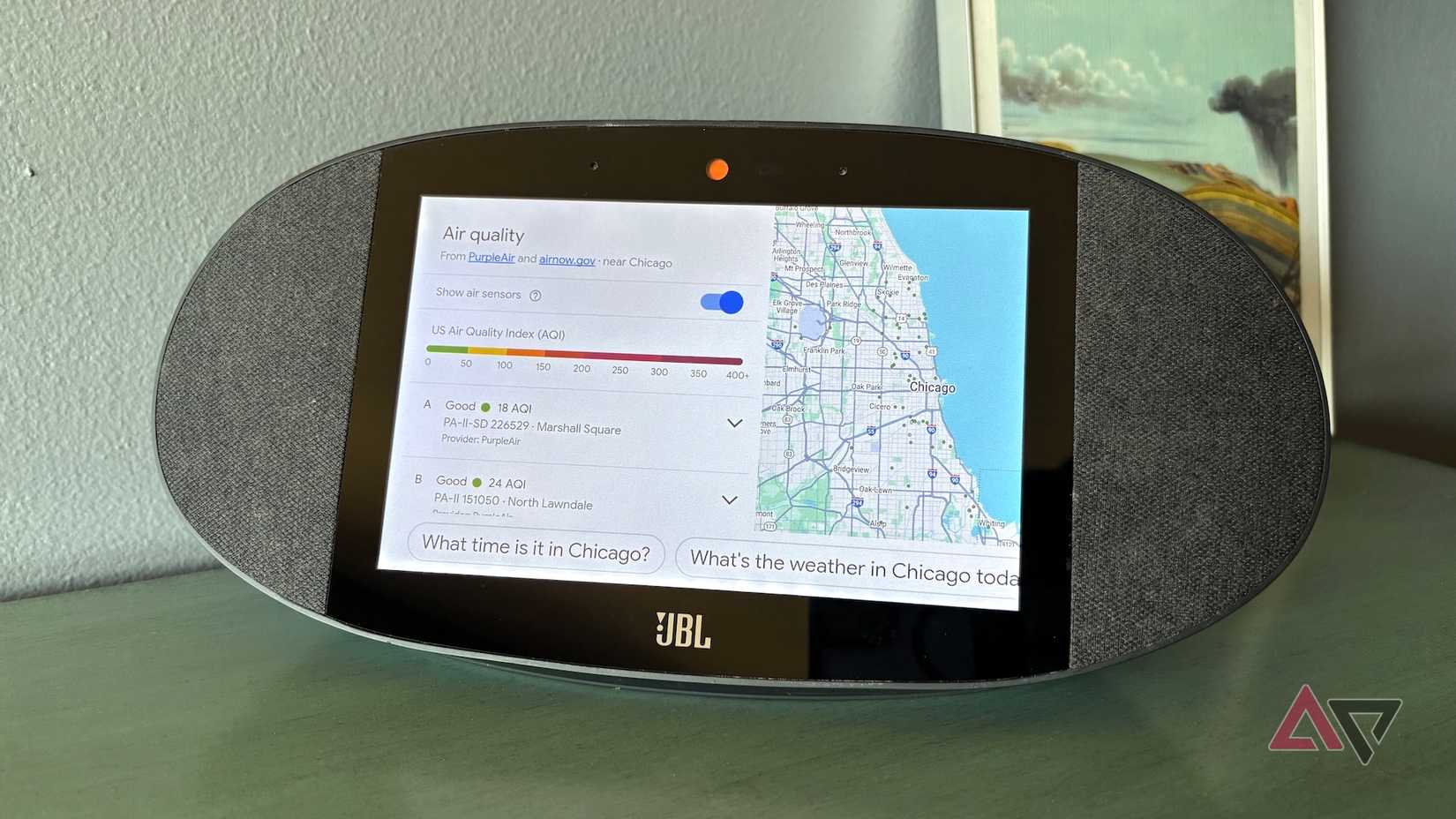
With a scale ranging from 0 to 500, the Air-Quality Index can tell you how clean the air is in your location. The higher the score, the more hazardous the air is.
The AQI measures the pollutants, including carbon monoxide, nitrogen dioxide, and particulate matter, that are present.
The EPA’s AirNow site and sensor-maker Purple Air provide air-quality data for Google.
I requested the score for Chicago, and the speaker said it was between 17 and 34, according to Purple Air. I checked AirNow’s site, which listed the city’s AQI as 41. Both answers are still considered “good” air quality.
Google Home’s weather may not give you everything you need
Watch out for wind chill
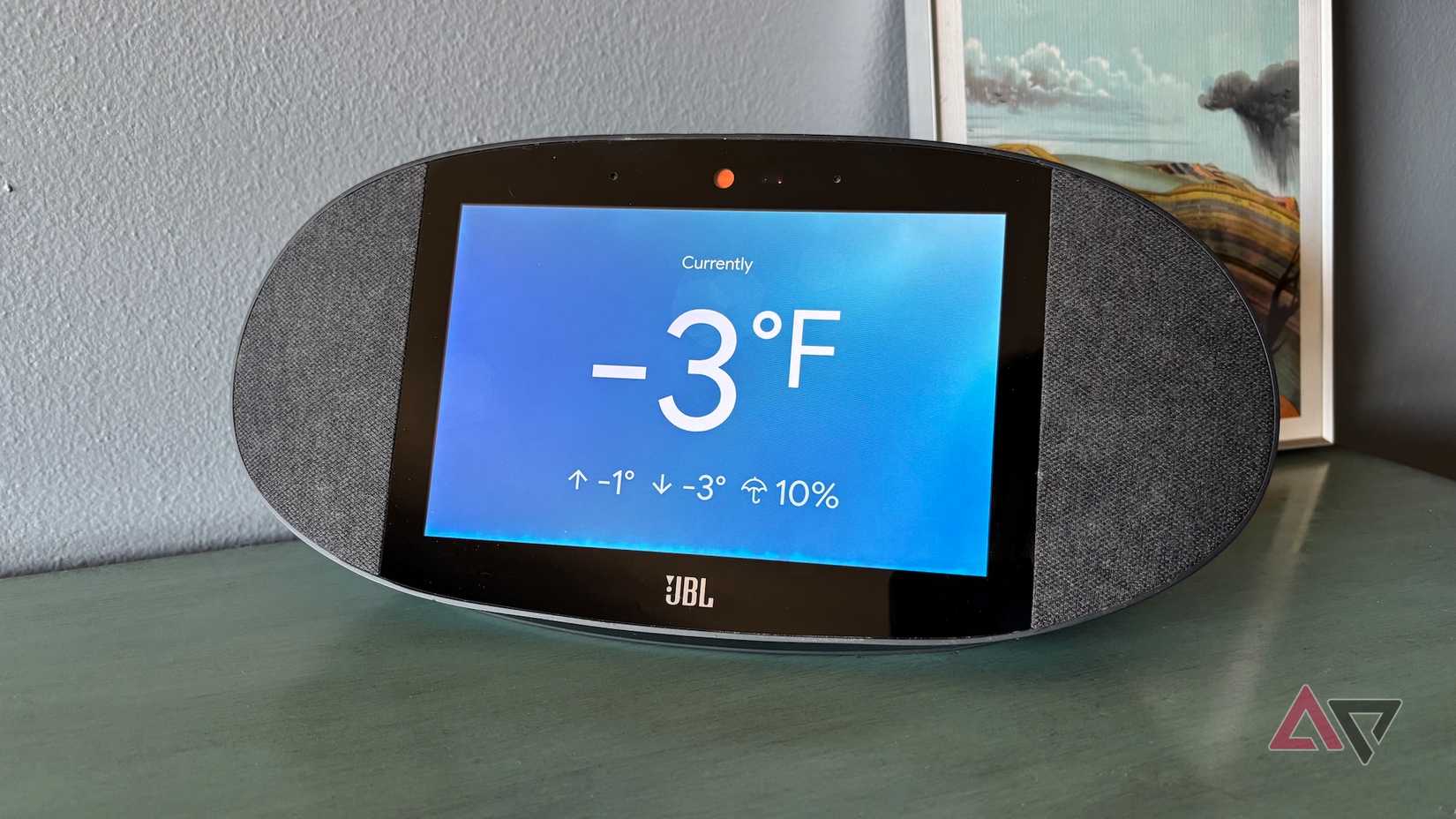
Chicago was in the midst of a vicious gold snap when I asked Google Home for the weather there. My smart speaker told me it was -3 degrees Fahrenheit.
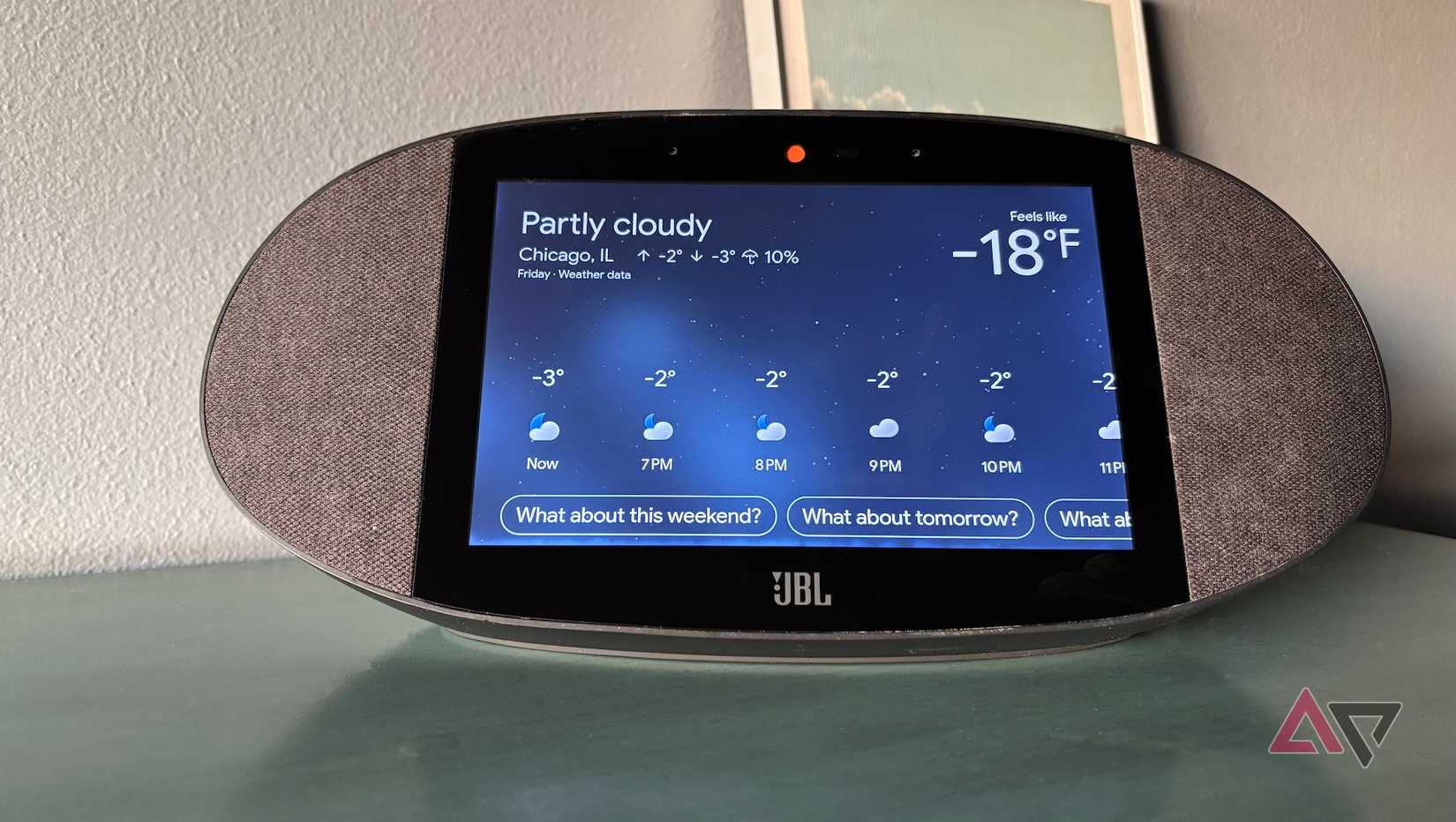
Although I wasn’t in the Windy City at the time, I knew it had to feel much colder. When I asked for the wind chill, Google said it felt like -19 degrees Fahrenheit. You have to specifically ask this question, according to Google.
At the same time, I checked the NWS site and two local news stations’ sites. All had some sort of alert relating to cold weather. My Google Home speaker hadn’t displayed anything.
At the same time, the native weather app on my iPhone displayed a cold-weather advisory for the next day in the Seattle area. My Google Home hadn’t offered that information, though I’d asked about the weekend weather several times.
Your smart speaker may not be ready for weather emergencies
Make sure you have a reliable source for heat, sleet, snow, and more
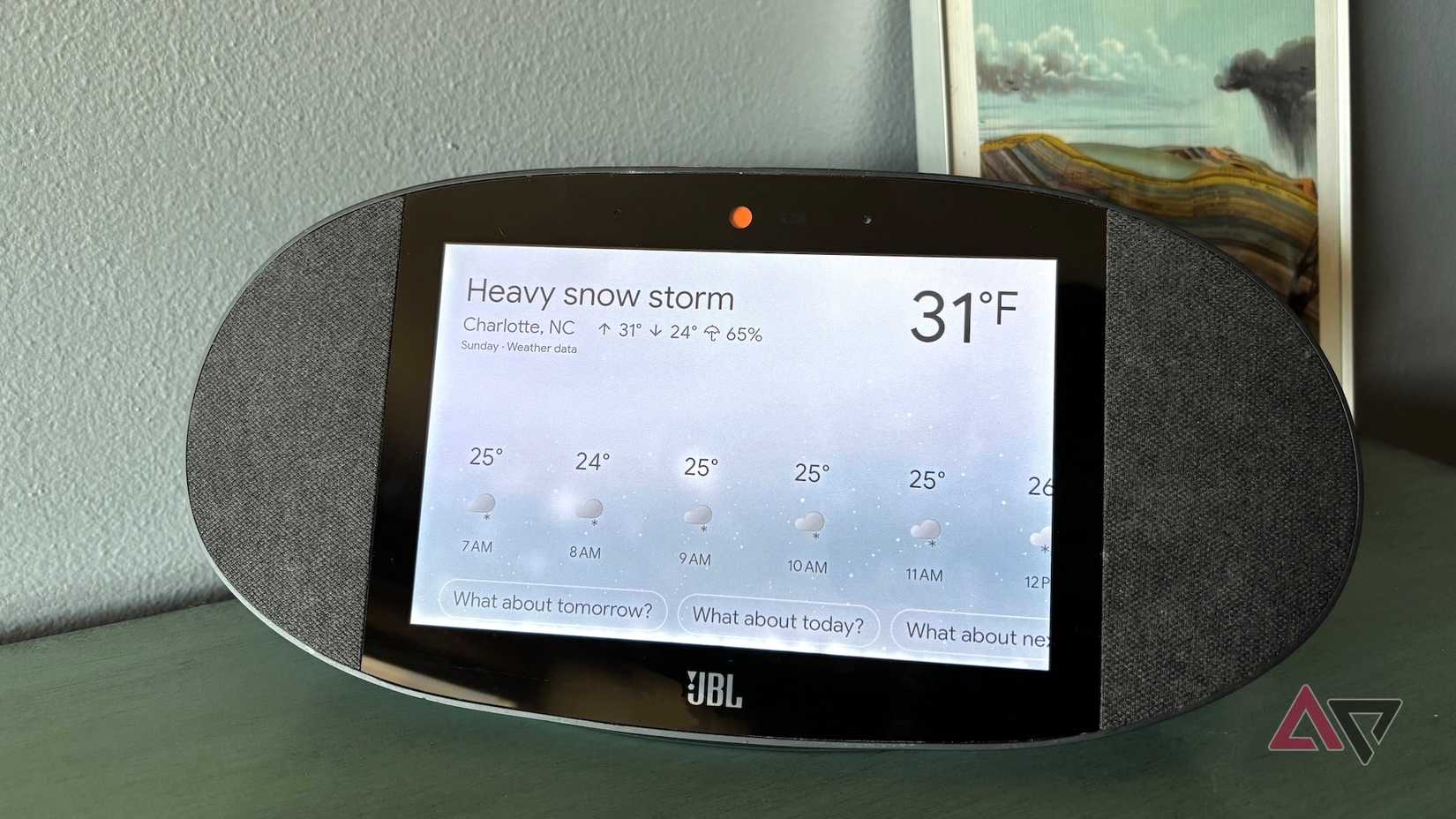
Google is working on getting SOS Alerts for crises, including excessive heat, floods, and fires, to users’ phones. However, its weather site stated that it may not deliver these warnings for every emergency yet.
While these warnings may show up in Search, Maps and Pixel Weather, they aren’t available on Google Home.
Instead, meteorologist DiMartino suggested consulting your local certified broadcast meteorologist. They’ll understand the nuances of your location and the biases and bugs in the forecast models, he said.
DiMartino said he isn’t familiar with Google Weather forecasts in particular, but as a meteorologist, he has concerns about people relying on apps at any time, especially during extreme events.
He gives this advice:
You want someone who’s going to understand the situation, understand how to read the data, and provide advice that’s going to put you in the safest position possible.
Getting accurate weather data may raise privacy concerns
Your speaker would like your exact location
Wildfires, flash floods, and other severe weather can move quickly. It’s one reason weather apps and services want to pinpoint your exact location.
If you don’t want your smart speaker to have your exact address, keep in mind that your weather data may be less accurate, even as forecasts themselves improve.
Google Home gives you weather at a glance, but you may want to dig deeper
Especially if the weather in your area is unpredictable
Your smart speaker may not be giving you all the weather information you need, whether it’s wind chill, humidity, or warnings.
Make sure to consult a trusted, local meteorologist to ensure you have all the accurate, up-to-date weather information.









