


Google Translate is an indispensable tool that has taken care of quick, on-the-go translations for students, researchers, travelers, and more since 2006.
It’s a reliable tool that’s only poised to get better with Gemini’s capabilities now making their way to Google Translate.
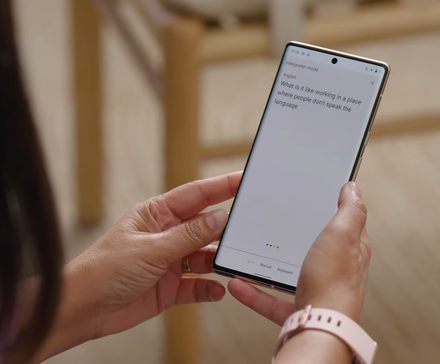
Highlighted by the tech giant in a new blog post today, Google Translate is gaining what Google is describing as “state-of-the-art text translation quality,” in both Search and the Translate app. This should result in you seeing more natural, conversational, and accurate text translations.
The tool will now use Gemini to better understand your prompt’s nuanced meaning. This includes the ability to better understand idioms, slang, and even local expressions.
Say you’re trying to translate an English idiom like ‘stealing my thunder.’ Now, it’s easier than ever to get a more natural, accurate translation, instead of a literal word-for-word translation. Gemini parses the context to give you a helpful translation that captures what the idiom really means.
Improved translations for the web and the Google Translate app (Android and iOS) are rolling out now in the US and India between English and nearly 20 languages, including Spanish, Arabic, Chinese, Japanese, German, and more.
Real-time, natural-sounding translations right to your headphones

Google is also rolling out a new beta experience that should allow users to hear real-time translations in their headphones. “This new experience works to preserve the tone, emphasis and cadence of each speaker to create more natural translations and make it easier to follow along with who said what,” suggests the tech giant.
The new feature should be especially useful when you’re trying to have a conversation in a different language, listening to a speech or lecture while abroad, or watching a TV show or film in another language. You simply put in your paired headphones, open the Translate app on your phone, tap ‘Live Translate,’ and you’re good to go.
As of today, the feature is rolling out to the Translate app on Android in the US, Mexico, and India. Support for more countries and iOS should arrive in 2026.
Duolingo who?
Credit: Google
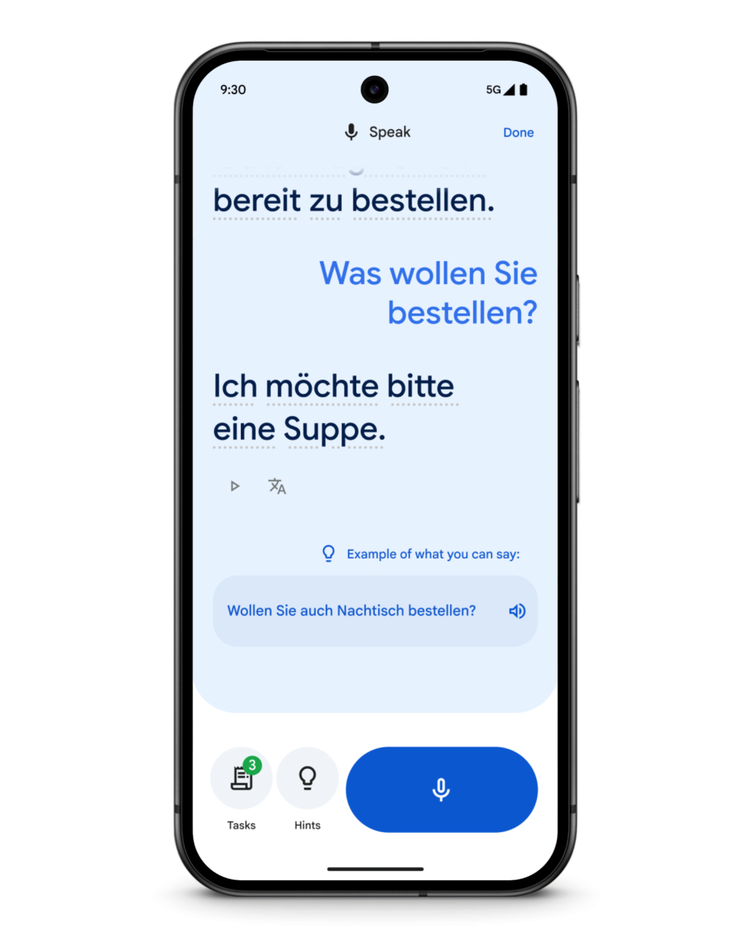
Elsewhere, the tech giant doesn’t just want to translate for you, it also wants to teach you. Google Translate already offers language-learning tools, which are now being supercharged with new bells and whistles.
For example, users will now see a new way to track how many days in a row you’ve been learning, encouraging them to keep the streak going.
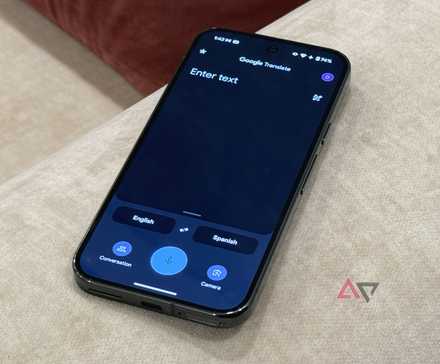
Google is also expanding the availability of said learning tools to nearly 20 new countries, including Germany, India, Sweden, Taiwan, and more. This leaked earlier in the day, and has now essentially been confirmed by Google.
All the above-mentioned changes are rolling out now (unless specified otherwise) across Google Translate on mobile and the web.











