


I found my old diary while cleaning for the New Year. It was buried in a shoebox at the back of my closet, yelling KEEP OUT on the cover.
Opening it was like stepping right back into my fifteen-year-old brain. I knew I was dramatic back then, but the cringe hit harder than I expected. So much secondhand embarrassment it was almost painful.
Not long ago, I’d seen someone tweet about uploading their diary to an AI, so I figured, why not do the same? Here’s where things went from there.

My teenage drama got an unexpected intellectual makeover
Credit: Google
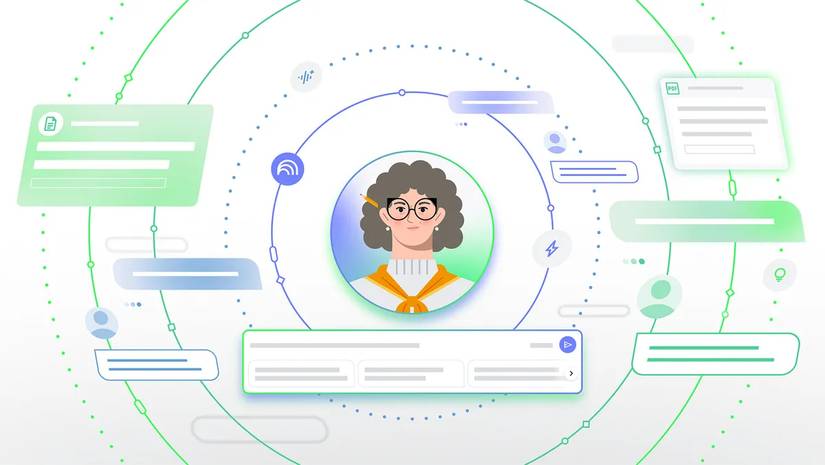
When I tapped submit, I was ready for NotebookLM to tear me apart. I’d fed it everything, from my cringe rap bars to the over-the-top daydreams about my crush.
Thanks to Google’s Optical Character Recognition (OCR), I didn’t manually enter anything. I snapped a photo, and given how messy my handwriting is, the OCR did surprisingly well. It missed a couple of words, but the AI filled in the rest.
When the Audio Overview started, I found myself listening to Brad and Jen, the AI hosts, analyze my life.
Brad starts, taking my teenage freakout over where I sat in class and calling it “study of social hierarchy and self-positioning.” Jen jumped in after, saying it showed early signs of “professional ambition.”
The AI hosts kept riffing on my diary, treating my teenage drama like it was some deep case study. Hearing that deep analysis style applied to pure melodrama was genuinely funny.
Here’s another example:
Diary: I know she’s online, why doesn’t she say something?
Brad: You notice a pattern of volatility here. His relationship dynamics seem unstable, and the lack of communication triggers a significant emotional response.
NotebookLM hallucinated and made up meanings I never intended
The AI definitely missed some of the sarcasm. My teenage self used irony as a full-time defense mechanism, and NotebookLM took everything literally.
One of my entries said, “If my dad explains mortgages again, I’m throwing myself into the sun.” The hosts treated it like an actual warning sign, calling it “a serious cry for help” and worrying about fifteen-year-old me’s emotional stability.
It also hallucinated meaning where there was none. It took five whole minutes to break down a “poem” I wrote, complimenting its “avant-garde style.” Meanwhile, it was just a tracklist with missing commas.
But even with all this, NotebookLM somehow stitched together a narrative arc. It made my life sound like a proper story, even if it was mostly just a string of homework complaints.
NotebookLM analyzed my past and surprised me with what it found
Credit: Lucas Gouveia / Android Police | Yalcin Sonat / Shutterstock
Despite the glitches, hearing them analyze me felt strangely surreal. They noticed things about me that I never caught myself.
Take this conversation, for example:
Brad: You can see a clear pattern here. He keeps coming back to his video games. It’s almost obsessive, but somehow it feels like a crucial part of how he copes and grows.
Jen: Exactly! The games represent an escape, a world where he has control and can forget the stress of real life.
Then came the accidental roasts. The AI unintentionally insulted my younger self with devastating accuracy.
Jen: It sounds like he really struggled with perspective here. Every event is treated as a catastrophe.
Brad: There’s a lack of long-term vision. He’s trapped in the moment.
They called me dramatic, and I couldn’t help but laugh.
My concerns about the next frontier for me-dia
Credit: National Security Agency / Central Security Service
This experiment hints at a weird new future for media consumption.
Generative AI writing emails or building websites is normal now, but AI being the audience is something entirely different.
Honestly, I haven’t fully wrapped my head around it yet.
But maybe in the future, true crime and politics podcasts will take a back seat, and we’ll upload emails, texts, and location data to get a show about our week.
What worries me is the echo chamber it builds. Rather than engaging with diverse opinions, we’ll have AI-generated companions who mirror our beliefs.
It’s radical self-validation, but now as a service you can subscribe to.
With how things are going, Black Mirror is moving from fiction into reality faster than I expected.
The experience is worth trying
I listened to the episode, then made another one focused on my college years.
I know it’s just a trick. Brad and Jen are nothing more than neural networks running on weighted matrices in some server farm. But that dopamine hit is real.
If you’re curious or want an unusual way to pass the time, try it out. It’s actually pretty fun. These AI hosts can surprise you with what they find and might even reveal something new about yourself.
If you’re worried about your data, Google says your info is protected and isn’t used to train NotebookLM. But privacy can never be guaranteed, so it’s totally understandable if you decide not to take the risk.











