


If you’re reading this story because a tantalizing headline on Google Discover made you click, well there’s a chance that was the work of AI and not the human who wrote it (me).
This is not to knock my own headline writing skills. It’s because, as The Verge spotted, Google has been testing AI-generated titles and they frequently are far from the facts of the stories they lead to.
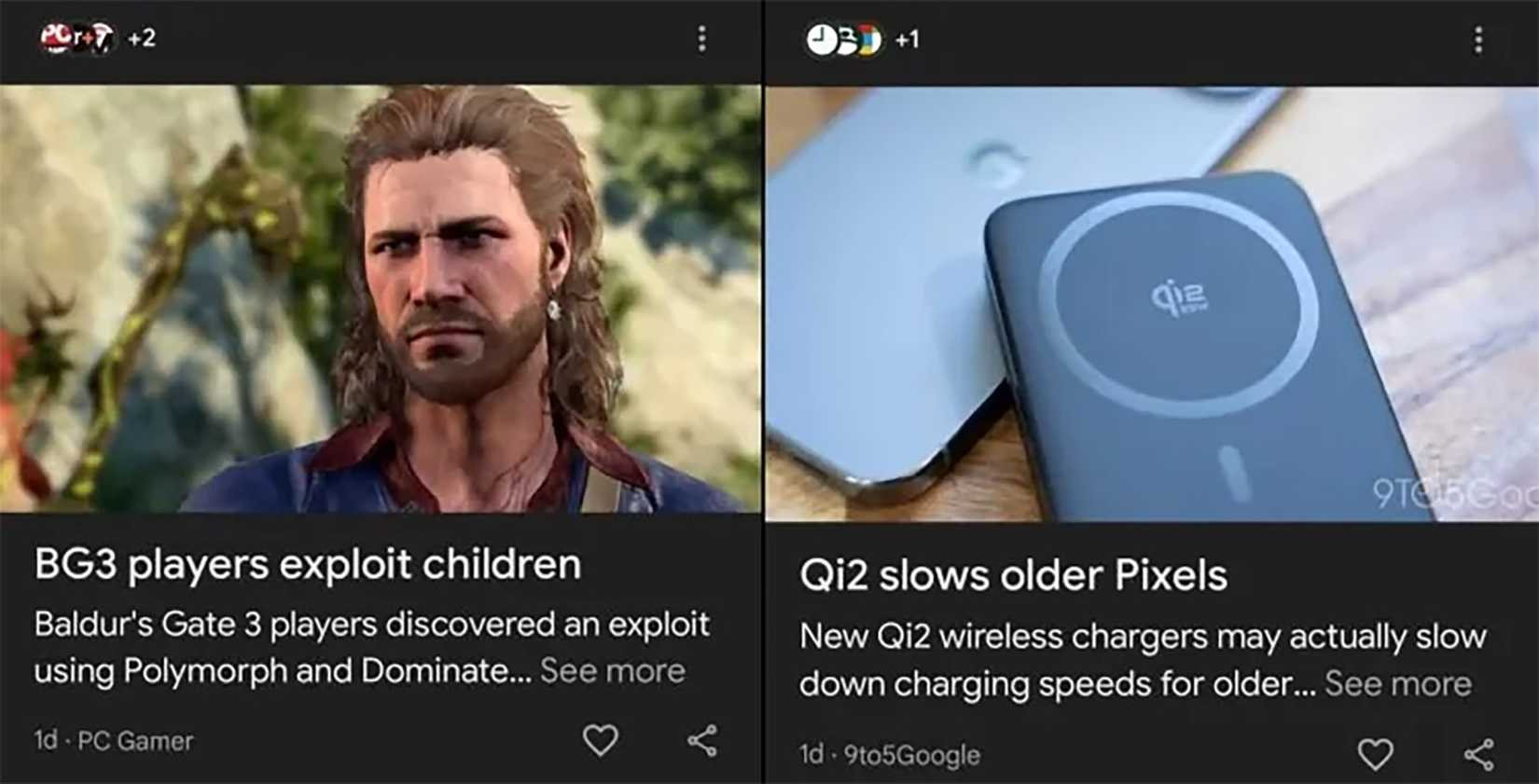
Credit: The Verge
The Verge found the headline “Qi2 slows older Pixels” on a story from 9to5Google that was actually titled “Don’t buy a Qi2 25W wireless charger hoping for faster speeds – just get the ‘slower’ one instead.” And on an article from Ars Technica, “Valve’s Steam Machine looks like a console, but don’t expect it to be priced like one,” Google’s AI decided to go with the totally incorrect “Steam Machine price revealed.”
Some headlines bypassed lies and ended up flat-out unintelligible, like the one on a PCGamer story that said, “Schedule 1 farming backup.” It’s far from the highly engaging title the story actually holds, “Schedule 1 creator had a backup plan if Steam rejected it—pack up the product, don a farmer’s hat, and ‘pivot it to be a farming game’ like Stardew Valley.”
On the rare chance that a reader tries to delve into who’s to blame for this mess and taps “See more,” they’ll learn that what Google Discover serves up is “generated with AI, which can make mistakes.”
The effort to rewrite headlines is not a mistake, though, as a Google spokesperson told The Verge. “These screenshots show a small UI experiment for a subset of Discover users,” said Mallory De Leon, communications manager at Google. “We are testing a new design that changes the placement of existing headlines to make topic details easier to digest before they explore links from across the web.”
That experiment, though, is harmful to publications. While I could not duplicate it as I apparently do not fall into that “subset of Discover users,” I have spent over two decades in tech media and have witnessed what Google has given to digital media and what it has taken away, and the latter grows every day.
Google’s AI Overview has gutted readership and revenue and this latest experiment threatens to lessen trust in the media at a time when it’s already in serious jeopardy.
While there’s no way for those who do have access to the feature to let Google know that they dislike it, there is an option to report a story as clickbait in Discover. Unfortunately, this punishes the publication by limiting its visibility and not the party actually responsible for the misleading headlines.










